Featured spatial audio-visual hardware engineered by premier Shenzhen & Guangdong manufacturers, fully aligned with Japanese TELEC radio regulations, PSE safety specs, and ergonomic preferences.
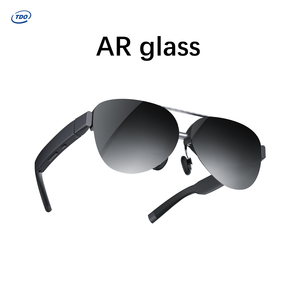
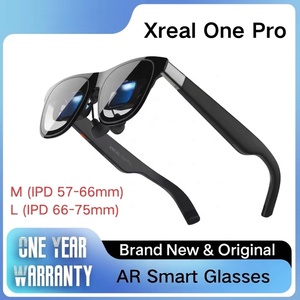
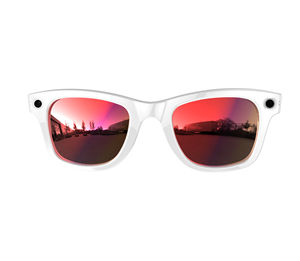
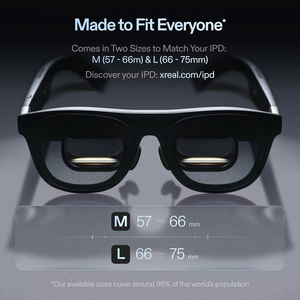
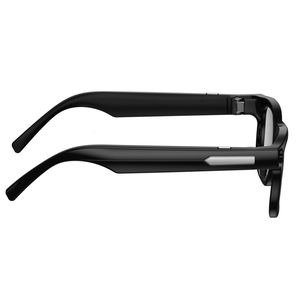
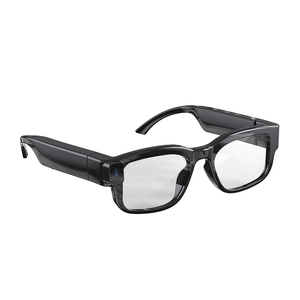
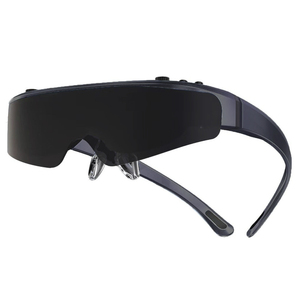
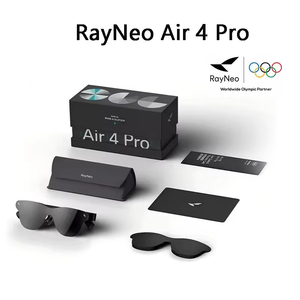
Understanding why top Japanese electronics brands, VR arcades, medical research facilities, and enterprise system integrators rely on Chinese VR/AR hardware OEM ecosystems.
Executive Summary: The Japanese Extended Reality (XR) sector—encompassing Virtual Reality (VR), Augmented Reality (AR), and Mixed Reality (MR)—is experiencing rapid expansion across both enterprise and consumer touchpoints. China’s Pearl River Delta (Shenzhen-Dongguan hardware cluster) manufactures over 85% of globally distributed VR head-mounted displays (HMDs). For Japanese B2B importers, sourcing directly from verified Chinese VR headset manufacturers bridges the gap between cutting-edge optical engineering and competitive landed costs.
Japan’s technology adoption patterns present unique commercial opportunities for hardware distributors. Driven by structural shifts such as workforce aging, high urban residential density, and advanced digital content consumption (including VTubers, anime IP metaverse environments, and industrial digital twins), demand for specialized VR/AR hardware has surged:
Entering the Japanese electronics market requires stringent compliance. Sourcing from experienced Chinese exporters ensures that hardware meets Japanese legal standards prior to customs entry:
| Certification / Mark | Governing Body in Japan | Regulated Hardware Scope | China OEM Compliance Capability |
|---|---|---|---|
| TELEC / MIC (Giteki) | Ministry of Internal Affairs and Communications | Wi-Fi 6E/7, Bluetooth 5.3/5.4, 2.4GHz/5GHz Wireless modules | Pre-certified module integration or factory-assisted laboratory testing in Shenzhen. |
| PSE Mark (Circle / Diamond) | METI (Ministry of Economy, Trade and Industry) | Lithium-ion polymer batteries, AC adapters, magnetic charging docks | PSE-certified battery cell sourcing (UN38.3 + IEC62133 compliant) for HMD power packs. |
| VCCI Class B | VCCI Council Japan | EMC radiation interference for household/office display electronics | Low-EMC PCB layout engineering ensuring compliance with residential noise limits. |
| J-MOS / JIS C 0950 | Japanese Industrial Standards | Chemical substance control (RoHS Japan equivalent for hazardous materials) | Full material test reports (SGS/TÜV) covering environmental safety standards. |
Evaluating Chinese VR/AR headset manufacturing standards against key performance indicators required by Japanese enterprise procurement officers.
Chinese manufacturers supply binocular 4K Micro-OLED displays delivering 3840x2160 resolution per eye with contrast ratios exceeding 100,000:1. This eliminates the "screen door effect" (SDE), vital for high-precision Japanese surgical and engineering applications.
Modern Chinese VR HMDs utilize multi-element Pancake lens designs that reduce front-weight torque by 40%, ensuring long-wear comfort. Lightweight BirdBath optics achieve 1200+ nits brightness with high PWM dimming frequency (3840Hz) for flicker-free operation.
Equipped with low-power dedicated spatial computing co-processors (such as the X1 spatial chip or Qualcomm Snapdragon XR platforms), supporting sub-millimeter 6DoF tracking, 1000Hz IMU updates, and ultra-low latency gesture recognition.
Headquartered in Shenzhen, Guangdong, ZUMU Technology Co., Ltd. combines high-precision optical assembly with strict quality management systems optimized for Japanese international trade standards.
We provide complete SDK support for Unity and Unreal Engine, accompanied by natively localized Japanese user interfaces, companion iOS/Android APPs, and detailed Japanese operation manuals (取扱説明書).
Unlike Western VR headsets designed for different facial dimensions, our HMD frames incorporate optimized Interpupillary Distance (IPD) adjustment mechanisms (58mm–72mm) and customized nose bridge pads tailored for East Asian users.
Every VR headset production batch undergoes a 48-hour continuous burn-in test, optical alignment validation, thermal imaging inspection, and a 1.2-meter drop test to meet high reliability standards.
Real-world deployments of Chinese VR/AR hardware across commercial sectors in Tokyo, Osaka, Nagoya, and Yokohama.
Japanese department stores, luxury hotel chains, and airline carriers utilize 4K VR headsets to train service staff in traditional Omotenashi etiquette, customer response handling, and emergency response simulations within immersive virtual settings.
Engineers in Aichi Prefecture’s industrial hubs use lightweight 8MP AI camera smart glasses and AR HMDs to overlay schematic diagrams onto physical assembly lines, enabling hands-free operation and remote guidance from off-site technical experts.
From private viewing on the Shinkansen high-speed rail to Location-Based Entertainment (LBE) VR gaming centers in Akihabara, ultra-portable binocular AR/VR glasses provide personal private screens without ambient light bleed.
Addressing key logistics, technical, and regulatory questions raised by Japanese importers and B2B buyers.
Connect directly with our senior OEM project managers in Shenzhen. Obtain wholesale catalog pricing, TELEC/PSE compliance dossiers, and sample dispatch details within 24 hours.
Get Catalog