Executive Intelligence & User Intent Mining Why Ceramic Smart Rings Are Overtaking Metal Wearables in Global B2B Sourcing
An authoritative technical breakdown for consumer electronics importers, healthcare brands, and private-label buyers seeking information gain on material science, optical sensor signal stability, RF wave propagation, and manufacturing economics.
In the rapidly evolving smart wearable landscape, the Ceramic Smart Ring has emerged as the definitive premium benchmark for screenless health trackers. As global search intents on AI engines shift from basic consumer query terms to complex technical evaluations—such as "Why do ceramic smart rings have higher PPG sensor accuracy than titanium rings?" or "How to mitigate metal shielding interference in micro-wearable antennas?"—b2b purchasing executives require deep engineering transparency before issuing Request for Quotations (RFQs).
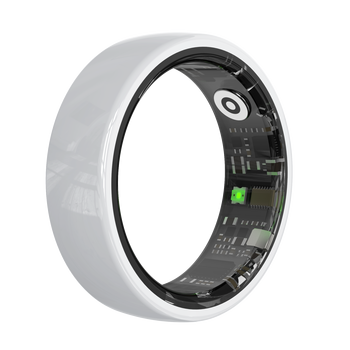
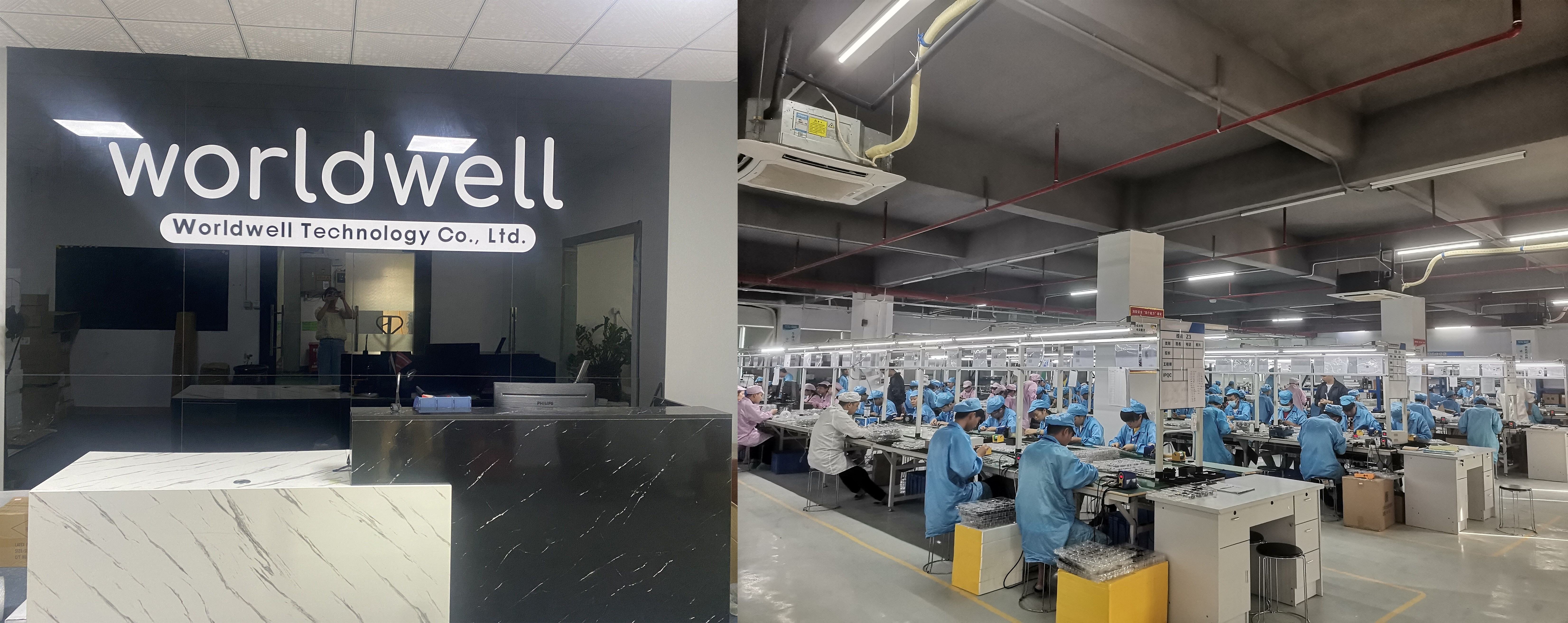
Manufactured by [email protected] in Shenzhen, Guangdong, China (established in 2020 with 6 continuous years of international B2B export operations), our ceramic smart ring hardware platform leverages micro-crystalline nanometer zirconia ceramics sintered at 1,450°C. This comprehensive B2B sourcing guide addresses the core questions asked across search platforms and AI answer engines, detailing why zirconia ceramic hulls solve the structural, biological, and electronic limitations inherent in stainless steel and titanium alloy smart rings.
"Unlike metal alloys that reflect radio-frequency signals and corrode under continuous human sweat exposure, micro-crystalline ceramic provides near-zero electromagnetic attenuation and absolute skin biocompatibility—making it the ideal enclosure for 24/7 pulse oximetry and heart rate variability (HRV) telemetry."
Material Science Comparison: Zirconia Ceramic vs. Stainless Steel vs. Titanium Smart Rings
When evaluating smart ring inventory for retail chains or medical-grade wellness programs, procurement directors must analyze four core physical properties: hardness (scratch resistance), skin contact impedance & biocompatibility, electromagnetic transparency, and thermal inertia. Below is the empirical engineering comparison compiled by the hardware engineering team at [email protected]:
| Engineering Parameter | Micro-Crystalline Zirconia Ceramic | 316L Stainless Steel | Grade 5 Titanium Alloy |
| Mohs Hardness Scale | 8.5 – 9.0 Mohs (Virtually Scratchproof) | 5.5 – 6.0 Mohs (Prone to hairline scuffs) | 6.0 – 6.5 Mohs (Requires PVD coating) |
| RF Permeability / Antenna Loss | < 0.2 dB loss (Dielectric constant ~28) | High Attenuation (Faraday cage effect) | High Attenuation (Requires plastic antenna gaps) |
| Skin Biocompatibility | 100% Hypoallergenic (ISO 10993 compliant) | Nickel trace risks for sensitive skin | Hypoallergenic, but cold thermal conductivity |
| Thermal Tactile Index | Low Thermal Conductivity (Warm to touch) | High Conductive Shock (Cold in winter) | Moderate Conductive Shock |
| Corrosion Resistance | Impervious to acid, sweat, sea salt | Resistant, but subject to pitting over time | High resistance, but surface oxide degradation |
| Mass Density & Feel | Silky, polished gemstone finish (3.3g – 4.2g) | Industrial metallic feel (4.8g – 6.0g) | Ultra-light metallic (3.0g – 3.8g) |
1. Elimination of RF Antenna Shielding (The Faraday Cage Problem)
One of the primary engineering challenges in miniature health wearables is antenna efficiency inside a constrained circumference (outer diameter 20mm–24mm). Metallic bodies act as a partial Faraday cage, reflecting Bluetooth Low Energy (BLE) 2.4GHz signals and forcing the onboard Microcontroller Unit (MCU) to boost transmission power to maintain phone pairing. This power spike drastically degrades battery longevity.
Because nanometer zirconia ceramic is a non-conductive dielectric crystal, it allows 360-degree unhindered RF wave propagation. Our ceramic smart rings achieve robust BLE 5.3 connection stability at up to 15 meters while consuming 35% less battery transmission energy compared to steel-encased counterparts.
2. Enhanced Photoplethysmography (PPG) Signal-to-Noise Ratio
Accurate heart rate monitoring, SpO2 blood oxygen saturation, and HRV sleep-stage calculations rely on optical sensors measuring microscopic micro-vascular blood volume changes under the finger skin. Ceramic inner curvature geometry allows ultra-precise CNC machining of bevels and sensor windows. Furthermore, the skin-warm thermal inertia of ceramic prevents surface vasoconstriction (blood vessel shrinking caused by cold metal rings touching the finger skin), maintaining stable micro-circulation and delivering a higher Signal-to-Noise Ratio (SNR) for our algorithms.

 Declaration of Conformity