1. Diamond Setting Mechanics: CNC Claw Setting vs. Adhesive Bonding
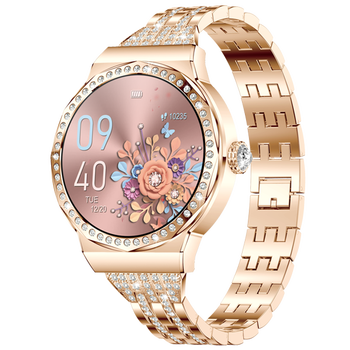
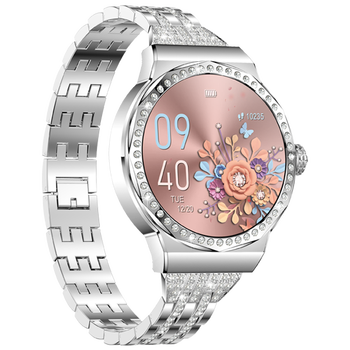
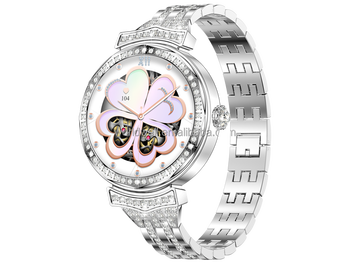
In low-cost consumer wearables, manufacturers frequently utilize UV-cured liquid adhesive to glue rhinestones onto zinc alloy strap links. Under standard usage, skin oil, perspiration, and temperature fluctuations degrade the adhesive resin, leading to severe stone loss and high return rates. At [email protected], our luxury Diamond Strap Smartwatches utilize precision CNC micro-prong setting techniques.
Each crystal stone is inserted into a dedicated recessed cavity mitered directly into 316L stainless steel or high-density alloy links. Mechanical metallic claws are then pressed over the girdle of the stone using automated micro-press machinery. This mechanical retention guarantees stone stability even under stringent 1.2-meter drop tests and continuous ultrasonic cleaning cycles.
2. PVD Vacuum Plating vs. Chemical Water Electroplating
Tarnishing and allergic skin reactions are major concerns for international buyers. Chemical water plating yields thin, uneven metallic coats that oxidize quickly when exposed to human sweat. We utilize Physical Vapor Deposition (PVD) vacuum ion plating inside titanium chambers.
- ▶ Base Layer: 0.1 μm Titanium Nitride (TiN) hard adhesion primer layer.
- ▶ Decorative Layer: Real 18K Rose Gold / Real Gold vaporized target material (0.03–0.05 μm).
- ▶ Protective Top Coat: Anti-fingerprint clear ceramic nano-coating (AF Coating) minimizing scratch vulnerability.
This process ensures compliance with EU REACH nickel-release directives and passes rigorous 48-hour artificial sweat immersion testing without color shifting.

 Declaration of Conformity