Explore our top-performing acoustic solutions tested for sweat resistance, physical stability, high signal clarity, and custom buyer-label branding. Direct factory orders with flexible sample tiers.
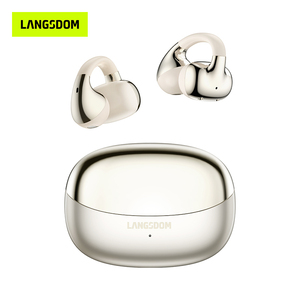
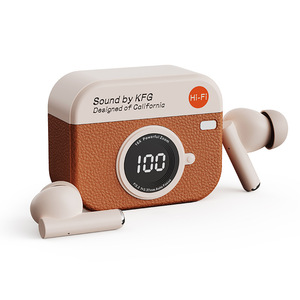
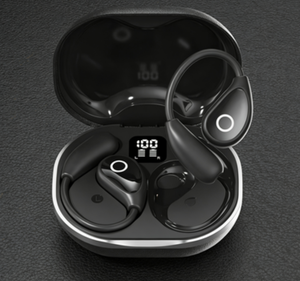
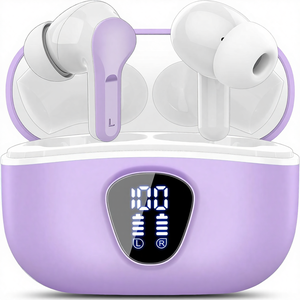
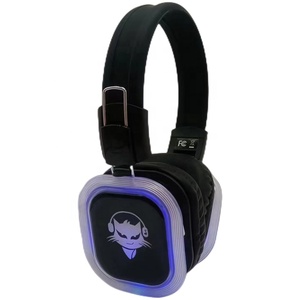
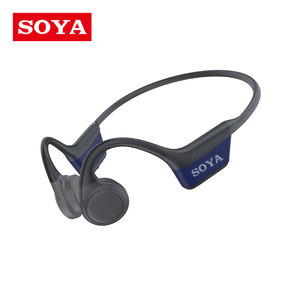
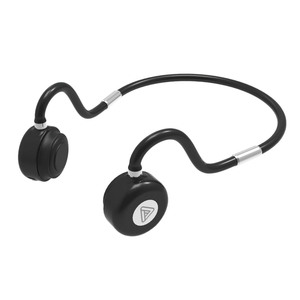
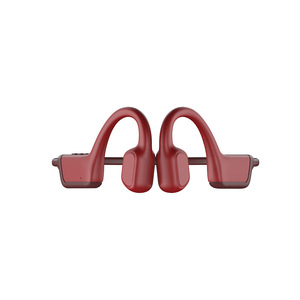
The global sports earphones market is undergoing a seismic paradigm shift. Traditional in-ear silicone designs—once praised for passive noise isolation—are rapidly yielding market share to Open-Ear Directional Audio and Bone Conduction Transducers. For enterprise procurement directors, brand owners, and consumer electronics distributors, understanding this architectural shift is essential for safeguarding inventory velocity and maximizing gross retail margins.
Driving this transition are three non-negotiable consumer requirements: spatial situational awareness during outdoor athletic pursuits (running, cycling, triathlons), structural hygiene (preventing ear canal bacterial build-up caused by trapped sweat), and long-term acoustic safety. Brands that rely solely on heritage in-ear form factors face mounting margin compression as consumer preference pivots toward ergonomic open-ear solutions.
When specifying custom OEM products, engineering managers must carefully evaluate the physics of sound transmission to match target demographics:
Utilizes piezoelectric or electromagnetic transducers to bypass the tympanic membrane entirely, transmitting mechanical vibrations through the temporal bone directly to the cochlea. Best suited for extreme sports, marathons, and swimming (IP68 requirement). Delivers unmatched physical stability and total ear canal opening.
Employs dynamic micro-drivers positioned adjacent to the pinna. Incorporates directional sound tube geometry and phase-inverted acoustic cancellation algorithms to minimize sound leakage while offering richer low-frequency bass response than traditional bone conduction. Ideal for everyday outdoor fitness and urban commuting.
A primary driver of returns (RMA) in sports audio sourcing is moisture ingress caused by acidic sweat or liquid submersion. B2B buyers must enforce strict hardware testing protocols beyond supplier marketing claims:
While standard IPX5 protection relies on basic hydrophobic nano-coating over the PCB assembly, premium IP68 swimming-grade sports earphones require full acoustic membrane sealing, liquid-injection molded silicone enclosures, and magnetic charging pins that eliminate structural micro-gaps created by traditional Type-C rubber plugs.
Anticipating hardware, chipset, and firmware advancements that will shape consumer purchasing decisions over the next 3 to 5 years.
Next-generation Bluetooth 6.0 sports earphones are integrating on-chip neural processing units (NPU) capable of dual-microphone Environmental Noise Cancellation (ENC) during high-wind outdoor activities, alongside real-time voice interpretation directly linked to smartphone ecosystem APPs.
Adoption of modern BT 6.0 protocols introduces microsecond-level clock synchronization and precise distance tracking. Athletes benefit from zero audio-video lag during interactive app-guided workouts and precise indoor asset-tracking if earphones are misplaced.
The elimination of smartphones during high-intensity training has driven demand for sports earphones featuring integrated 32GB high-speed flash memory. Swimmers and marathoners can play loss-less FLAC/MP3 files locally without requiring cellular or Bluetooth connectivity.
Headquartered in Shenzhen, Guangdong—the world’s epicenter of personal audio innovation—ZUMU Technology Co., Ltd. (Est. 2020) stands as a verified on-site B2B manufacturer backed by over 6 years of continuous international export operations across North America, Western Europe, and the Middle East.
From initial industrial design to acoustic chamber testing, SMT surface mounting, and structural mold execution, we control the complete manufacturing value chain under one roof.
Every production batch undergoes automated Optical Inspection (AOI), 48-hour continuous battery burn-in, acoustic spectrum analysis, drop testing, and pressure-chamber IP68 validation.
Full support for laser-etched buyer logos, custom firmware pairing names, customized equalizer profiles, multilingual user manuals, and customized retail gift packaging.
We supply full export documentation including Declarations of Conformity, CE, RoHS, FCC, and air/sea battery transport safety certifications (MSDS, UN38.3).
Support for low-MOQ sample evaluation starting from 1 piece for ready-stock models up to high-volume private label container orders with dedicated account managers.
B2B clients work directly with assigned English-speaking project coordinators and acoustic engineers, ensuring fast turnaround on engineering change orders (ECO).
Detailed technical and commercial answers tailored for personal audio importers, brand managers, and sourcing agents.
MOQ requirements are structured according to customization depth. For sample testing and market validation of ready-stock models, orders start from 1 to 50 pieces. For custom laser logo etching and custom branded packaging, MOQ typically starts at 500 to 1,000 pieces per model. Fully customized private-label tooling, custom pantone color matching, and unique firmware integration generally begin at 3,000 pieces per model variant.
Unlike suppliers that rely on theoretical software simulations, ZUMU Technology Co., Ltd. subjects 100% of production samples from every batch to pressurized water-immersion tanks and saline spray chambers. IP68 swimming earphones undergo continuous hydrostatic pressure testing equivalent to 3 to 5 meters of depth for a duration of 2 hours, followed by full acoustic frequency response testing to verify zero diaphragm degradation.
Yes. Our internal software team offers complete SDK and firmware customization. We can flash custom Bluetooth pairing names (e.g., "YourBrand-Audio"), customize boot-up audio prompts in multiple target languages, adjust equalizer (EQ) sound profiles for sports acoustics, and integrate customized SDKs into your existing iOS/Android branded applications.
We provide full compliance dossiers required by international customs authorities. This includes European Declaration of Conformity (CE-RED), RoHS 2.0 hazardous substance compliance, FCC ID certification for radio frequency devices, and full battery transportation documentation including UN38.3 test reports, 1.2m drop test reports, and Material Safety Data Sheets (MSDS).
Sample orders and ready-stock catalog items are dispatched within 3 to 5 business days. For standard OEM branding orders (logo engraving + custom box), lead time is typically 18 to 22 calendar days following golden sample sign-off. Complex ODM projects requiring new plastic injection molds follow a standardized 35-to-45 day timeline including T1 trial mold reviews and pilot batch assembly.
Battery reliability is paramount for sports wearables. We source strictly Grade-A lithium-polymer cells equipped with integrated Seiko protection ICs (preventing overcharging, over-discharging, and thermal runaway). Every production lot undergoes automated 48-hour continuous cycle burn-in testing to guarantee capacity retention exceeds 80% after 500 charge cycles.
Partner with a verified Guangdong manufacturer. Request factory-direct pricing, engineering feasibility reviews, and sample evaluations today.