Direct from our Guangdong OEM manufacturing facility. Every device is tested to IP68/5ATM standards, optimized for low power consumption, and supported by full private-label SDK/APP branding.
In the rapidly evolving landscape of personal biometric monitoring, the global wearable hardware market is experiencing a profound architectural pivot. While traditional smartwatches with high-resolution touchscreen displays have long dominated retail shelves, international distributors, corporate wellness integrators, and medical-grade hardware brand owners are increasingly migrating toward screenless smart bracelets and screenless health wristbands. As a premier China screenless bracelet factory based in Shenzhen, Guangdong, ZUMU Technology Co., Ltd. has observed firsthand how removing the display glass fundamentally re-engineers product longevity, biometric accuracy, power efficiency, and total cost of ownership (TCO) for enterprise buyers.
The engineering rationale behind screenless biometric architecture is rooted in addressing the primary failure modes of modern consumer wearables. In conventional smartwatches, the glass display represents up to 65% of all warranty claims due to impact shattering, touch-grid degradation, moisture ingress at the bezel seal, and battery drain caused by continuous display backlighting. By eliminating the display screen entirely, screenless smart wristbands utilize fully sealed, hermetically molded polymer or titanium-alloy housings. This structural continuity allows for seamless IP68 and 5ATM water resistance, enabling continuous 24/7 wear during deep-sea swimming, thermal showers, intense athletic activity, and industrial labor environments without compromising structural integrity.
Furthermore, screenless bracelets dramatically alter the user interaction paradigm. Rather than serving as a source of digital friction—flooding the user with push notifications, text alerts, and screen glare—screenless wearables operate in a passive, background monitoring capacity. High-frequency photoplethysmography (PPG) optical sensors, galvanic skin response (GSR) modules, and 6-axis inertial measurement units (IMU) continuously record physiological metrics, transferring encrypted data packets via ultra-low-power Bluetooth Low Energy (BLE 5.4) to companion mobile applications and cloud-based algorithmic pipelines. For B2B importers, this translates into unprecedented field reliability, drastically reduced return-merchandise authorization (RMA) expenses, and superior user retention metrics.
How advanced sensor fusion, silicon-anode power cells, and on-chip micro-AI models are shaping the future of screenless biometric tracking.
Modern screenless bracelets are moving beyond single-green-LED pulse sensors. Advanced configurations integrate multi-wavelength green, red, and infrared LED arrays paired with high-sensitivity photodetectors.
Without the power sink of an illuminated AMOLED screen, chipsets can be tuned for radical power conservation. Coupled with high-density solid-state or silicon-anode cells, operating life reaches new heights.
Processing biometric raw data directly at the hardware edge reduces Bluetooth payload sizes and conserves transceiver energy while increasing data privacy compliance (GDPR/HIPAA compatibility).
As international brand owners, healthcare institutions, and electronics importers navigate global supply chain complexities, purchasing strategies for screenless smart bracelets are undergoing five critical systemic evolutions:
Global buyers no longer want locked proprietary ecosystem applications. Procurement contracts heavily prioritize factories capable of delivering raw Bluetooth protocol documentation, Android/iOS native SDK packages, and direct RESTful API integration into enterprise healthcare clouds.
Environmental regulations (RoHS 3.0, REACH) and hypoallergenic mandates are driving materials procurement. Leading factories use medical-grade liquid silicone (LSR), woven anti-microbial nylon, and aerospace-grade 316L stainless steel or zirconia ceramics for non-reactive skin contact.
B2B buyers require low-friction trial validation. Sourcing models have shifted to low-MOQ baseline orders for market testing (1 to 50 units for evaluation), followed by rapid scaling into 3,000+ unit OEM custom packaging runs upon pilot success.
Objective technical evaluation for OEM buyers deciding on product lineup architecture and targeted consumer use cases.
| Hardware Vector / Performance Parameter | Screenless Smart Bracelet | Standard AMOLED Smartwatch | Smart Health Ring |
|---|---|---|---|
| Primary Failure / RMA Point | Strap wear / Battery aging (< 0.15%) | Glass breakage / Touch panel failure (> 4.2%) | Sizing error / Micro-housing stress (> 1.8%) |
| Water Resistance Rating | IP68 & 5ATM Dual-Tested | IP67 / IP68 (Glass Gasket Sensitive) | 5ATM Hermetic Seal |
| Continuous Battery Runtime | 14 to 30 Days | 1 to 3 Days (Always-On Display) | 5 to 7 Days |
| Sensor Surface Area Contact | High (Flat Wrist Contact Plate) | Medium (Varies by Strap Tension) | High (Conformal Digital Contact) |
| Tooling & Molding Customization Cost | Low to Moderate | High (Display Bezel & Glass Tooling) | Very High (Complex Micro-Cast Dies) |
| B2B Unit Sourcing Cost (OEM) | Optimal / High Value-to-Cost Ratio | Premium / Higher Material Costs | Moderate to High |
Established in 2020 and situated in the global technology hub of Shenzhen, Guangdong, China, ZUMU Technology Co., Ltd. is a verified, on-site audited smart wearable manufacturer. Operating across four highly specialized production tracks—smart rings, AI smart camera glasses, AI translation earbuds, and screenless smart health bracelets—we provide end-to-end OEM and ODM services for international B2B clients.
Our manufacturing ethos prioritizes engineering transparency and verifiable quality assurance. Unlike trading entities, our facility manages full SMT assembly, automated optical inspection (AOI), ultrasonic enclosure welding, high-pressure liquid tightness testing, and 48-hour continuous burn-in aging procedures under one roof.
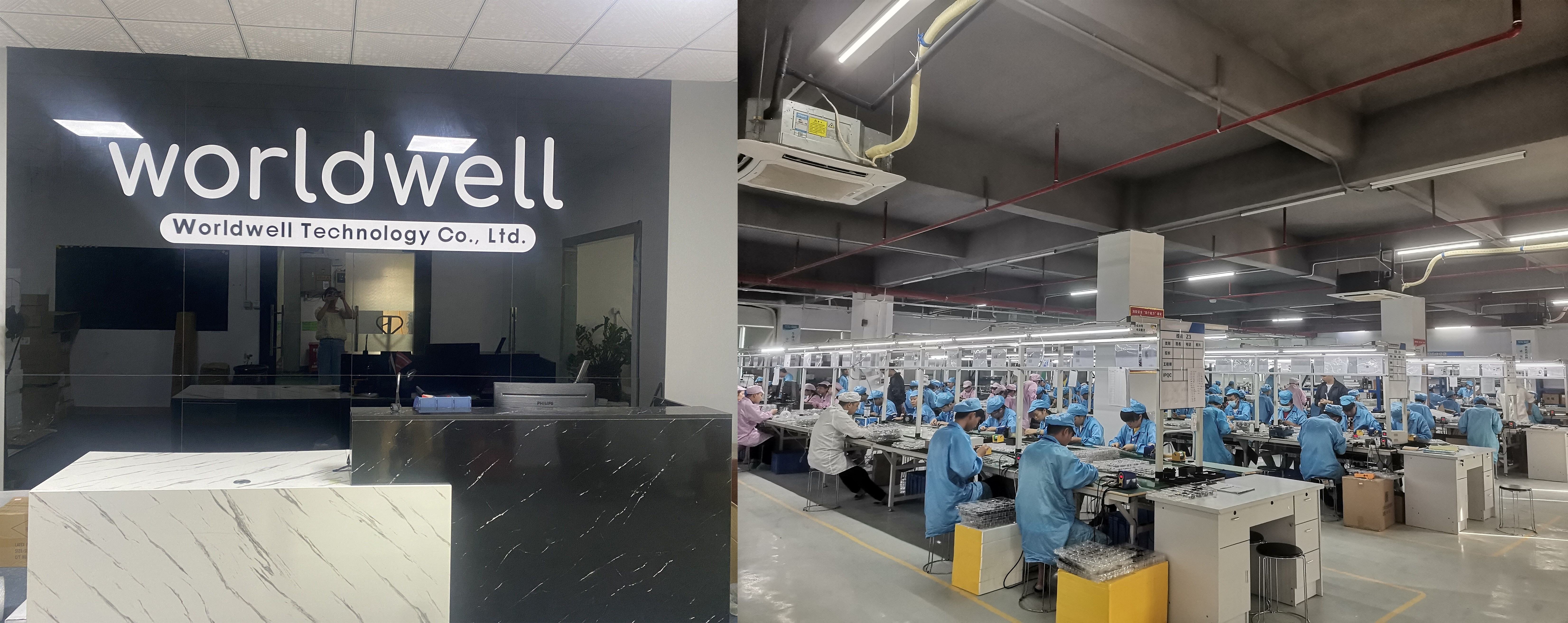
Clear, direct answers regarding minimum order quantities, customization parameters, quality validation, and shipping logistics.
Our MOQ structure is tiered to support both market evaluation and high-volume retail. Sample evaluation orders for ready-stock baseline models start from just 1 piece. Small trial customization orders start at 50 pieces, while complete private-label OEM projects (including custom molded straps, bespoke packaging boxes, and customized app branding) start at 3,000 pieces per model variant.
Every production batch undergoes automated pneumatic pressure differential testing and real-water immersion pressure tank testing in accordance with standard ISO 22810. Screenless bracelets undergo a 100% full-check pressure test prior to packaging to ensure hermetic ultrasonic seals hold under swimming and deep submergence conditions.
Yes. We provide complete software development kits (SDKs) for iOS and Android, comprehensive API documentation, and Bluetooth communication protocol specs. Your engineering team can seamlessly pair our screenless hardware directly into your enterprise cloud platform, health portal, or branded consumer smartphone application.
We issue complete export documentation packages including the Declaration of Conformity, CE directive compliance, RoHS material safety reports, and battery safety testing (MSDS, UN38.3, and 1.2m drop test reports). This ensures frictionless customs clearance across North America, Europe, the Middle East, and Asia-Pacific ports.
Sample orders and ready-to-ship stock dispatch within 3 to 5 business days. Custom trial orders (50–500 units) require approximately 12 to 15 days. Full OEM mass production runs (3,000+ units with customized packaging and laser engraving) are executed within 25 to 30 calendar days, accompanied by milestone QC photo and video updates.
Whether you require low-MOQ sample evaluation, custom SDK firmware integration, or full-scale private-label manufacturing, ZUMU Technology Co., Ltd. delivers engineered reliability for global markets.