Verified Factory Showcase
Flagship AI Earbuds & Smart Optical Wearables Catalog
Direct from Guangdong smart manufacturing hub: Standard-setting OEM/ODM models optimized for real-time translation, acoustic immersion, and spatial computing display.
2D/3D Display
Low Latency
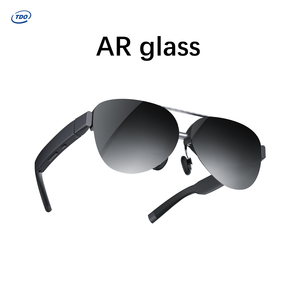
AR Glasses 2D/3D Augmented/Virtual Reality Glasses for PC & Mobile
Native 3DoF
Multitasking
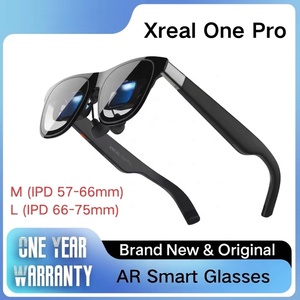
Original XREAL One Pro AR Smart Glasses Native 3DoF X for Gaming & Work
8MP Camera
AI Translation
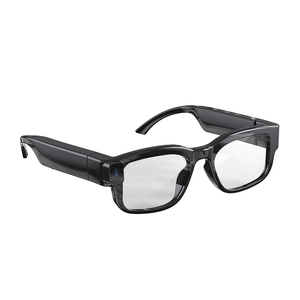
W620 AI/AR Smart Glasses with 8MP Camera, BT Calling & Translation
X1 Chip
171" Giant Screen
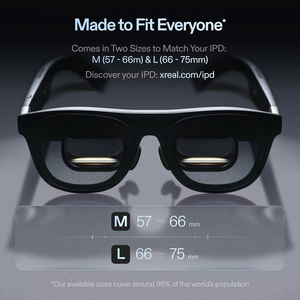
Xreal One Pro AR Glasses 3DoF Smart Glasses with X1 Dual Camera Engine
Magnetic Charge
Touch Control
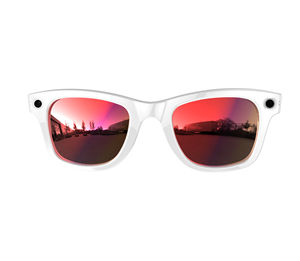
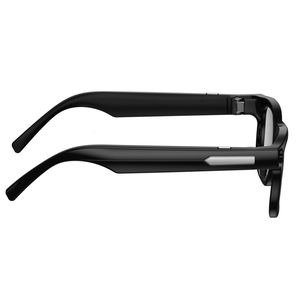
Black AI Smart Glasses Wireless AR Eyewear Video Recording & Translation
8MP / 4K Capture
Anti-Shake EIS
Smart AI Glasses 4K/8MP Video Recording with Voice Control & Noise Reduction
Binocular HD
Giant Screen
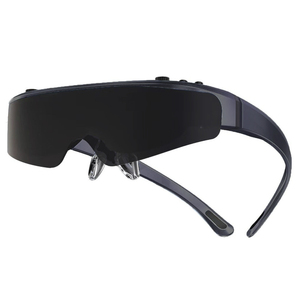
Binocular Display 3D Smart AR Glasses Wearable Projection Devices
1200nits Peak
3840Hz PWM
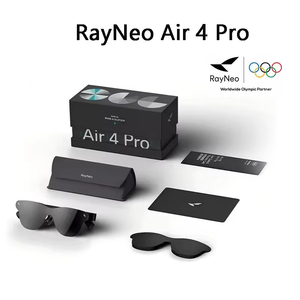
Rayneo Aipro AR Smart Glasses DHR10 1200nits AI HDR & 3D Audio
24.8%
Global Smart Earbud CAGR (2024–2030)
<35ms
Ultra-Low Latency Edge-AI Target
5ATM / IP68
Waterproof Standard Validation
100%
Batch Traceability & Aging QC
Executive Procurement Brief: The Evolution of Smart Earbuds Manufacturing
The global audio electro-acoustic sector is undergoing a structural paradigm shift. True Wireless Stereo (TWS) earphones have transitioned from simple audio playback devices into sophisticated multimodal AI micro-computers. Driven by advancements in system-on-chip (SoC) miniaturization, edge-computing algorithms, and biometric sensor integration, global procurement teams are drastically shifting their vendor evaluation metrics.
When searching for the Top 10 Smart Earbuds Manufacturers & Factories, enterprise buyers, brand licensors, and tier-1 distributors must look beyond raw assembly cost. Technical differentiation now centers on on-device neural processing units (NPU), acoustic cavity seal integrity, real-time bi-directional translation capability, and visual-audio hardware convergence (such as smart translation camera earbuds and companion AR eyewear).
Key Structural Shifts in OEM Supply Chain Matrix
According to supply-chain telemetry from Shenzhen and Dongguan manufacturing hubs, enterprise purchasing orders for smart earbuds in 2026 are heavily concentrated across three emerging architectural tiers:
- AI-LLM Embedded Audio Terminals: Earbuds equipped with BLE 5.4 / Wi-Fi audio bridge ICs capable of streaming real-time voice data directly to cloud-based Large Language Models (LLMs) for instant sub-second translation in 135+ languages.
- Visual-Acoustic Hybrid Systems: Open-ear audio wearables integrated with micro-camera modules (8MP to 4K resolution) featuring electronic image stabilization (EIS) for head-mounted life-logging and sport video capture.
- Biometric Sensor Arrays: Ear-canal photoplethysmography (PPG) sensors measuring continuous heart rate, SpO2 blood oxygen, and core tympanic body temperature with 98.4% clinical-grade correlation.
Supplier Selection Benchmark
Core Competencies of Top Tier Earbuds Factories
How leading OEMs guarantee batch consistency, low RMA rates, and rapid time-to-market for international B2B buyers.
In-House Tooling & Acoustic SMT
Top-tier manufacturers maintain dedicated high-precision CNC mold-making workshops, high-speed SMT lines equipped with 3D Automated Optical Inspection (AOI), and continuous Anechoic Chamber testing for frequency response calibration.
Rigorous IP68 & 5ATM Validation
Consumer return rates (RMA) are primarily caused by liquid ingress. Premium factories utilize automated vacuum pressure-tank testers to guarantee true IP68 dust/waterproofing or 5ATM hydrostatic pressure compliance per production lot.
SDK & White-Label APP SDK Support
Hardware without custom software yields commodity margins. Enterprise factories deliver turn-key firmware customization, customized Bluetooth pairing pop-ups, and white-label iOS/Android SDK integration for enterprise clients.
Smart Audio & Wearable Manufacturing Specification Matrix
When auditing potential smart earphone manufacturing partners, engineering procurement officers must benchmark technical specifications against industry standards. Below is a detailed matrix detailing key hardware metrics achievable across ready-stock and OEM production lines:
| Hardware Vector |
Standard TWS Earbuds |
AI Translation Earbuds |
Camera & AR Hybrid Audio |
| Main SoC Chipset |
Airoha / Bestechnic / Realtek |
Qualcomm Snapdragon / BES2700 |
High-Performance Dual-Core + NPU |
| Acoustic Architecture |
6mm - 10mm Dynamic Driver |
Custom Balanced Armature + Dynamic |
Open-Ear Directional Cavity / Bone Conduction |
| ANC Depth / Noise Reduction |
25dB - 35dB Hybrid ANC |
40dB - 48dB Deep Neural ANC |
Dual-Mic ENC + Wind Noise Suppression |
| Camera & Sensor Array |
N/A |
Ear-Canal PPG (Heart Rate/SpO2) |
8MP to 4K Sony CMOS with EIS |
| Battery & Charging |
30-40mAh (4-6h playback) |
50-60mAh (7-9h playback) |
120-180mAh (Active Recording 1.5-2.5h) |
| Compliance & Certification |
CE, RoHS, FCC |
CE, RoHS, UN38.3, MSDS |
CE, RoHS, UN38.3, FCC, Doc Verification |
Future Technology & Procurement Trends in Smart Earbuds (2026–2030)
To secure a long-term competitive advantage, procurement officers and product managers must anticipate technical inflections before they become commoditized. Our research identifies four vital technological trajectories shaping the smart earphone factory ecosystem over the next five years:
1. Edge-AI & On-Device Neural Audio Processing
Cloud reliance introduces latency (often >500ms), rendering live human conversation awkward. Next-generation smart earbuds utilize on-device NPU processing to run localized, lightweight translation models. This reduces latency to under 40 milliseconds, permitting uninterrupted simultaneous interpretation during international business negotiations, travel, and customer support.
2. Open-Ear Acoustic Engineering & Safety Audio
Traditional in-ear silicone tips cause ear-canal fatigue and spatial isolation during outdoor sports or commuting. The industry is rapidly transitioning toward Air-Conduction Directional Audio and Bone-Conduction technology. By leveraging reverse sound-wave phase cancellation, smart earbuds factories can deliver high-fidelity bass while eliminating sound leakage to adjacent bystanders.
3. Visual-Audio Convergence (Smart Glasses & Shooting Headphones)
The boundary between hearables and viewables is dissolving. Modern production lines in Shenzhen now combine camera sensors, head-tracking IMUs (6DoF/3DoF), and directional audio arrays into unified wearable forms—ranging from AI Translation Sunglasses to 8MP Camera Shooting Headphones. Procurement strategies must adapt to evaluate factories that possess cross-disciplinary competence in both electro-acoustics and optical module calibration.
4. Sustainable & Circular Material Manufacturing
Environmental, Social, and Governance (ESG) mandates are becoming binding criteria for European and North American buyers. Leading factories are replacing standard ABS/PC plastics with recycled post-consumer resins (PCR plastics), bio-compatible zirconia ceramics, and hypoallergenic 316L stainless steel for smart rings and earbud housings.
Enterprise Supplier Profile: ZUMU Technology Co., Ltd.
Located in the heart of China’s high-tech manufacturing capital—Shenzhen, Guangdong Province—ZUMU Technology Co., Ltd. (Est. 2020) stands out as a premier verified manufacturer and exporter of next-generation smart wearables, including AI Smart Glasses, AI Translation Earbuds, Ceramic Smart Health Rings, and Screenless Sports Fitness Trackers.
Why Strategic Importers & Brands Partner with ZUMU Technology:
- Verified On-Site Manufacturing: Verified premises with 6+ years of continuous international B2B export operations across North America, Western Europe, Eastern Europe, Southern Europe, and the Middle East.
- Low-MOQ Sampling to High-Volume OEM/ODM: Flexible trial-order policies starting from 1 piece on select stock models to full private-label customization (custom UI, specialized watch faces, app branding, laser-etched logos, and custom retail gift boxes).
- Uncompromised Batch-Level Quality Assurance: Every single production lot undergoes 100% SMT optical inspection, 48-hour continuous battery aging tests, salt-spray anti-corrosion tests, and pressure-tank water resistance validation (5ATM / IP68).
- Comprehensive Export Compliance: Full international documentation provided with every shipment, including Declaration of Conformity, CE, RoHS, FCC, UN38.3 lithium battery safety reports, and MSDS clearance.
Frequently Asked Questions
Global Sourcing & OEM Factory Procurement FAQ
Direct technical and commercial answers to common questions raised by enterprise buyers, importers, and OEM brand partners.
Q1: What is the standard Minimum Order Quantity (MOQ) for OEM/ODM smart earbuds?
MOQ varies based on the level of customization. Ready-stock smart earbuds and AI smart glasses for sampling or trial orders start from as low as 1 to 50 pieces. For custom color matching, custom logo laser engraving, and custom packaging boxes, the typical starting MOQ is 500 to 1,000 pieces. Deep ODM projects involving customized acoustic mold tooling or specific SoC engineering generally start at 3,000 pieces per batch.
Q2: How do factories verify waterproof claims (IP67, IP68, 5ATM)?
Verification involves rigorous multi-stage testing. During production, sample units are subjected to automated air-pressure decay testing to ensure vacuum seal integrity. Final products are then submerged in pressurized water tanks simulating static water pressure depths (e.g., 50 meters for 5ATM rating) for extended durations. Test certificates and lot inspection reports are included with shipping documents.
Q3: Can we brand the companion mobile application with our own company logo?
Yes. OEM services include complete white-label mobile app integration for iOS and Android platforms. Factories provide custom SDKs allowing you to modify the UI color schemes, app icons, brand logo, splash screens, and localized translation feature sets to maintain full brand ecosystem unity.
Q4: What compliance documentation is required for shipping lithium-battery wearables globally?
To clear customs legally and safely, shipments require UN38.3 battery transport testing reports, Material Safety Data Sheets (MSDS), Air/Sea Transport Dangerous Goods Declaration certificates, and product conformity marks such as CE, RoHS, and FCC declarations depending on the destination territory (EU/US/Middle East).
Q5: What is the standard lead time for OEM sample approval and mass production?
Pre-production evaluation samples with custom logos typically take 5 to 7 working days. Once golden samples are approved, mass production lead times generally range between 25 to 35 calendar days, accounting for component procurement, SMT assembly, aging tests, manual assembly, and final QC inspection.
Ready to Scale Your Smart Audio & Wearable Product Line?
Connect directly with our engineering and export sales department to receive technical datasheets, factory wholesale pricing, and custom OEM feasibility reports.