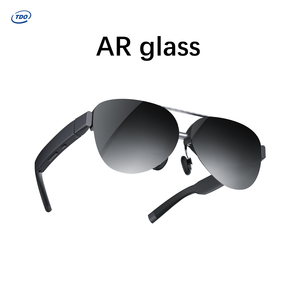
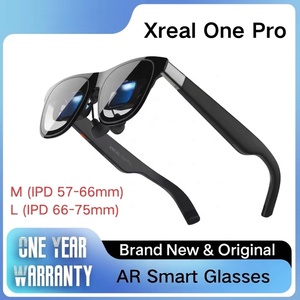
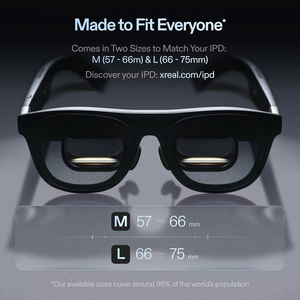
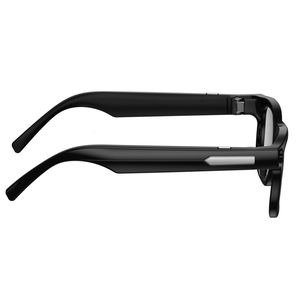
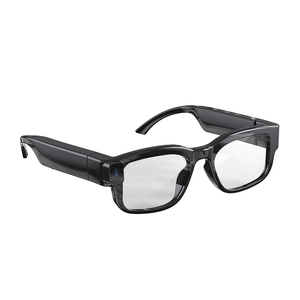
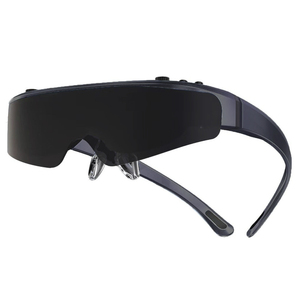
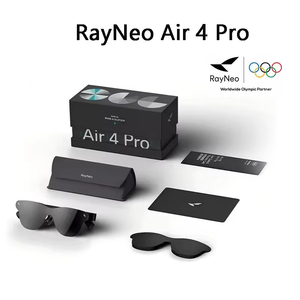
Explore our export-ready product series. Every platform supports turnkey private-label customization, SDK access, custom UI development, and rigorous IP68/5ATM hardware validation.
The global demand for high-precision smart wearables, fitness trackers, and specialized outdoor GPS timepieces has entered an era defined by multi-constellation positional accuracy, biometric sensor fusion, and micro-power architecture. For B2B importers, brand owners, and enterprise distributors, partnering with a specialized OEM/ODM GPS watch manufacturer is no longer just about procuring hardware—it is a technical collaboration to deploy stable firmware, compliant radio frequencies, and IP-rated mechanical enclosures that survive real-world environmental stress.
At ZUMU Technology Co., Ltd. (operating out of Shenzhen, Guangdong, China since 2020), contract manufacturing is approached with whitepaper-level rigor. As modern consumers demand multi-day operational autonomy alongside continuous GNSS tracking, hardware developers face intense thermal, structural, and electrical engineering constraints. Navigating the choices between L1-only receiver ICs versus dual-frequency L1+L5 GNSS modules, micro-AMOLED versus memory-in-pixel (MIP) displays, and zinc alloy versus 316L stainless steel structural frames dictates the commercial success of a wearable product line.
Information Gain Benchmark: Dual-frequency L1+L5 GNSS integration reduces signal multipath errors in dense urban environments by up to 65% compared to legacy L1 single-band receivers, maintaining lock accuracy within 1.5 meters under dense tree canopies.
Building a market-leading OEM GPS smartwatch platform requires harmonizing five distinct technical subsystems:
Simultaneous tracking across GPS, GLONASS, Galileo, and BeiDou. Low-power chipset architectures from Sony, Airoha, or Nordic Semiconductor enable cold-start positioning in under 30 seconds.
Multi-channel Photoplethysmography (PPG) sensors measuring continuous heart rate, SpO2 (blood oxygen saturation), HRV (heart rate variability), and sleep architecture with algorithmic noise filtering.
Double O-ring waterproof construction combined with ultrasonic casing welding, achieving certified IP68 and 5ATM/10ATM hydrostatic pressure compliance.
Laser Direct Structuring (LDS) or Flexible Printed Circuit (FPC) antennas integrated directly into the outer bezel frame to eliminate hand-attenuation signal degradation.
Dynamic clock scaling MCUs paired with high-density lithium-polymer battery cells (ranging from 280mAh to 530mAh), delivering up to 14 days of typical smartwatch mode standby.
Custom RTOS or Wear OS integration, multi-language UI, OTA (Over-The-Air) firmware update servers, and white-label iOS/Android companion applications.
As the international wearable hardware ecosystem matures, B2B sourcing executives must look beyond standard off-the-shelf specs to align with shifting consumer demands and regulatory frameworks. The evolution of OEM/ODM GPS watches is driven by several disruptive technical shifts:
The market for standalone wearable devices is shifting rapidly toward integrated 4G cellular modules (specifically LTE Category M1 and Narrowband-IoT). This enables real-time GPS location transmission, SOS emergency alerts, and voice calls without requiring a tethered smartphone connection. Procurement managers prioritizing kids' safety watches, elderly fall-detection devices, and extreme sports gear are actively moving toward eSIM (embedded SIM) designs. eSIM integration reduces internal PCB footprint, eliminates physical SIM card slots (a prime vector for water ingress), and simplifies international carrier certification.
Next-generation smart watches are moving from cloud-dependent data processing to on-device edge computing. By embedding low-power Neural Processing Units (NPUs) or micro-DSP cores into the primary microcontroller, custom GPS watches can run lightweight machine learning algorithms directly on the wrist. This allows real-time gesture control, dynamic voice translation, biometric anomaly detection, and predictive battery optimization without constant Bluetooth data syncing.
B2B buyer trends highlight a clear surge in premium industrial design for mid-tier and high-end smartwatches. Traditional plastic or basic zinc alloy casings are being superseded by Grade 5 Titanium for its superior strength-to-weight ratio, and Zirconia Ceramic bezels for extreme scratch resistance and skin-friendly hypoallergenic properties. For lens protection, synthetic sapphire crystal glass remains the gold standard for high-end tactical and aviation-grade GPS models, withstanding hardness levels up to Mohs 9.
International customs regulations are increasingly stringent. Global brands must ensure that their manufacturing partners adhere strictly to environmental and safety benchmarks. In addition to baseline CE, FCC, and RoHS certifications, top-tier B2B buyers now mandate REACH SVHC compliance, UN38.3 lithium battery transport testing, and MSDS certification for global air and ocean shipping. Furthermore, eco-conscious packaging—utilizing 100% recyclable soy ink and bio-degradable molded pulp inserts—has transitioned from an optional feature to a mandatory requirement for Western European and North American retail distribution.
| Hardware Subsystem | Standard Entry-Level Specifications | Advanced Enterprise/OEM ODM Specifications |
|---|---|---|
| GNSS Positioning | Single-Band L1 GPS / GLONASS (3-5m accuracy) | Dual-Frequency L1+L5 All-Constellation (1-1.5m accuracy) |
| Enclosure & Rating | ABS+PC / Zinc Alloy Body (IP67 / IP68) | Grade 5 Titanium / Zirconia Ceramic (5ATM / 10ATM Tested) |
| Display Panel | 1.4" - 1.8" TFT / LCD (240x280 resolution) | 1.3" - 1.43" AMOLED / Micro-MIP (466x466 high-density) |
| Biometrics | Single-green LED PPG (Heart Rate only) | Multi-wavelength PPG (HR, SpO2, Stress, HRV, Temperature) |
| Connectivity | Bluetooth 5.0 LE | Bluetooth 5.3 + Dual-Mode 4G LTE-M / eSIM + Wi-Fi 2.4GHz |
| Waterproofing QC | Sample air-pressure decay test | 100% Water-Pressure Tank Test + 48-Hour Hydrostatic Aging |
Navigating China's vast manufacturing landscape requires choosing an established, verifiable partner. ZUMU Technology Co., Ltd. is a verified, on-site certified manufacturer situated in the global technology hub of Shenzhen, Guangdong. Operating continuously across international B2B export channels, ZUMU delivers end-to-end contract manufacturing, private-label engineering, and custom electronics design tailored specifically for global brand owners, importers, and e-commerce leaders.
On-site verified manufacturing facilities located at Room 1102, Floor 11, Xiner Sports Center Complex Building, Xinqiao Street, Shenzhen. Operational history dating back to 2020 with verified legal compliance.
Every batch undergoes strict multi-stage testing: Surface Mount Technology (SMT) Automated Optical Inspection (AOI), pressure-tank hydrostatic immersion testing, drop tests, salt-spray corrosion tests, and mandatory 48-hour burn-in aging.
Smart rings, smart watches, and health bands are rigorously pressure-tested. We ensure full compliance with international ingress protection standard ISO 22810 for swimming and water exposure.
Full support for buyer-label services, laser-etched branding, custom boot-screen animations, custom UI face designs, dedicated Android/iOS app localization, and custom retail gift boxes.
Six years of seamless B2B international shipping across North America, Western Europe, Eastern Europe, Southern Europe, and the Middle East, supported by complete customs documentation.
Direct communication with experienced English-speaking account managers and hardware project coordinators, facilitating rapid NPI (New Product Introduction) cycles and prototype iterations.
Operational Sourcing Summary: ZUMU Technology Co., Ltd. provides low-MOQ sampling for ready-stock models starting from 1 piece, trial production runs from 50 pieces, and scalable full-custom private label runs (3,000+ pieces) with complete Declaration of Conformity releases.
Below are detailed technical and operational answers to common questions raised by procurement teams, hardware importers, and brand managers during supplier evaluation.
MOQ varies based on the level of customization. For ready-stock smart rings, AI glasses, and standard smartwatch models, sample evaluation orders start from as low as 1 to 50 pieces. For custom colorways, silk-screened logos, and customized packaging, MOQs typically start at 500 to 1,000 pieces. For full ODM engineering projects involving custom plastic/metal tooling molds, proprietary PCBA layouts, and bespoke firmware, the baseline MOQ is 3,000 pieces per model variant.
We implement a strict multi-tier quality control protocol. All waterproof-rated devices (IP67, IP68, or 5ATM) undergo 100% air-pressure decay testing on the assembly line to catch assembly seal defects instantly. Random batch samples are then subjected to high-pressure water tank immersion testing (simulating static water depth up to 50 meters for 5ATM models) and dynamic thermal-shock water baths. Furthermore, every batch passes a 48-hour burn-in aging test, drop testing from 1.2 meters, and salt-spray corrosion chamber evaluation before master carton sealing.
Yes. Our in-house software engineering team provides complete companion app branding and customization. We offer white-labeling of both iOS and Android smartphone applications, including full logo placement, custom color schemes, localized multi-language translation packs, and dedicated cloud server integration (AWS or localized regional servers for GDPR compliance). At the hardware level, we configure custom boot logos, pre-loaded watch face galleries, and custom UI design sets according to your brand identity guidelines.
ZUMU Technology Co., Ltd. supplies complete legal and logistics documentation required for international customs clearance. Every shipment includes a formal Declaration of Conformity (DoC), Commercial Invoice, Detailed Packing List, and Harmonized System (HS) Code guidance. Upon request, we provide CE (EMC/RED), FCC ID, RoHS, and REACH certification reports. For air and sea freight of battery-operated goods, we provide full UN38.3 test reports, MSDS (Material Safety Data Sheets), and 1.2m drop test certification compliance documents.
Off-the-shelf ready-to-ship samples are processed and dispatched within 3 to 5 business days. Custom sample prototypes featuring laser-engraved logos and customized packaging require 7 to 12 working days. Mass production lead times for standard OEM orders (1,000 to 5,000 units) average 25 to 35 calendar days following pre-production sample sign-off and deposit receipt. Full ODM projects involving structural tooling mold creation typically require 45 to 60 days for initial T1 sample review.
Integrating dual-band GNSS antennas into compact wearable housings requires isolating RF circuitry from the battery, display driver, and mainboard logic circuits. Our engineering team utilizes Laser Direct Structuring (LDS) antenna tracks applied directly onto the internal plastic frame, or high-efficiency FPC antennas mounted along the inner bezel wall. This guarantees high omnidirectional gain, minimizes ground-plane interference, and maintains fast positional lock even when the user's wrist is in motion.
Partner with an experienced, verified Shenzhen smart wearable OEM/ODM factory. Request a custom quote, technical datasheet, or sample unit for your project today.