Direct OEM/ODM smart eyewear systems manufactured in Shenzhen, Guangdong. Available for white-label branding, custom optical integration, and international wholesale distribution.
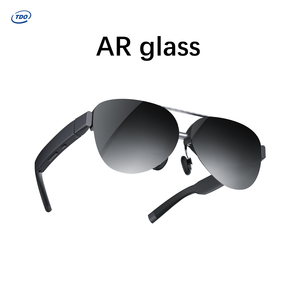
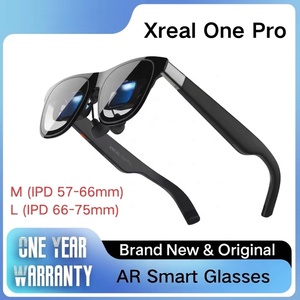
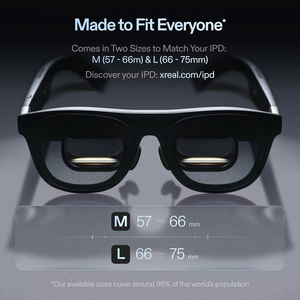
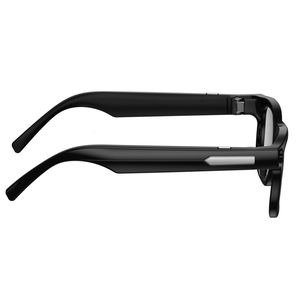
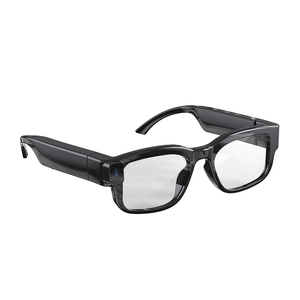
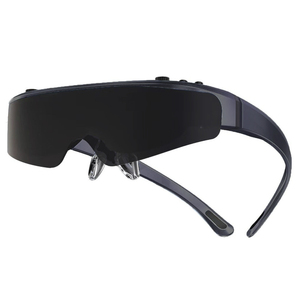
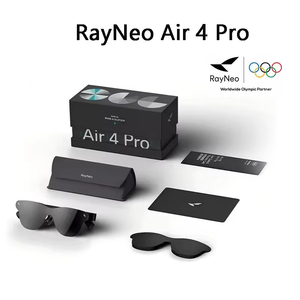
The global wearable electronics sector is undergoing a structural paradigm shift. As traditional audio hearables converge with optical displays and edge-based Artificial Intelligence, China Bluetooth glasses manufacturers and factories have become the primary engine driving hardware innovation, miniaturization, and mass-scale commercialization. Modern enterprise procurement teams—ranging from consumer electronics brand owners to telecommunication distributors and private-label retail importers—must now evaluate smart eyewear suppliers not merely as assembly houses, but as advanced System-in-Package (SiP) integrators, optical engine developers, and firmware architecture partners.
Shenzhen and the surrounding Pearl River Delta region in Guangdong Province represent over 85% of the world’s OEM/ODM smart eyewear manufacturing output. The manufacturing ecosystem integrates specialized Surface Mount Technology (SMT) lines capable of micro-pitch component placement, acoustic micro-speaker testing chambers, precision optical waveguide alignment tooling, and cleanroom assembly operations. Understanding the precise technological tiers and manufacturing capabilities across Chinese suppliers is paramount to securing high-margin, reliable, and compliant product inventory in 2026 and beyond.
While legacy smart glasses relied solely on basic Bluetooth 5.0 A2DP profiles driving directional micro-speakers for voice calls, the current generation manufactured by tier-1 China factories incorporates multi-modal AI chips (e.g., BES2700, Qualcomm Snapdragon AR1 Gen 1, and proprietary neural processors), Micro-OLED binocular display engines with up to 3840Hz PWM dimming, dual 8MP/4K camera sensors with Electronic Image Stabilization (EIS), and real-time multi-language AI translation algorithms integrated directly into bespoke Android/iOS companion applications.
Procurement managers must select product architectures based on target consumer demographics, battery endurance demands, thermal dissipation limits, and price-point positioning.
| Feature Parameter | Basic Audio Bluetooth Glasses | AI Camera & Translation Eyewear | Binocular AR Display Eyewear |
|---|---|---|---|
| Primary SoC Architecture | Qualcomm QCC3040 / Bestechnic BES2500 | Qualcomm Snapdragon AR1 / BES2700 + NPU | Custom X1 Chip / Dual Display Processing Engine |
| Display Engine | None (Audio Only) | Optional HUD Monocular micro-LED | Binocular Micro-OLED (Up to 1200 nits, 1080P/4K Virtual Canvas) |
| Optical System | N/A | Diffractive Waveguide / Prism HUD | BirdBath Optics / Surface Relief Diffractive Waveguide |
| Imaging & Capture | None | 8MP to 4K Camera + EIS Anti-Shake | Dual Camera / Spatial Depth Sensing Sensors |
| Acoustic Architecture | Open-Ear Directional Micro-Speakers | Dual-Mic Beamforming ENC Noise Cancellation | 3D Spatial Audio (e.g., Tuned by Bang & Olufsen / Custom DSP) |
| Battery & Charging | 80–120mAh (Magnetic Dock) | 150–250mAh (Type-C / Magnetic Fast Charge) | 400–600mAh (Direct DP Type-C Tether / External Battery Pack) |
| Target Frame Weight | 28g – 36g | 38g – 48g | 65g – 85g |
| Primary Target Applications | Hands-free Calls, Cycling, Outdoor Audio | Vlogging, AI Translation, Voice Assistants, POV Capture | 3D Gaming, Private Virtual Cinema, Multitasking Workspace |
An engineering prospective on how China's smart eyewear factories are evolving hardware standards to meet future consumer and enterprise requirements.
The next generation of Bluetooth smart glasses is transitioning from passive audio output devices to active cognitive assistants. Factory pipelines in Shenzhen are standardizing ultra-low-power Edge-AI neural processing units (NPUs). These allow local, latency-free optical character recognition (OCR), multi-language simultaneous interpretation (up to 40+ languages), and ambient voice query execution without relying continuously on heavy cloud connectivity. Bluetooth 5.4 and LE Audio protocols ensure minimal battery strain during continuous data synchronization.
Optical display engines are moving aggressively away from bulky refraction prisms toward high-transmittance Surface Relief Waveguides (SRW) paired with silicon-based Micro-OLED displays. Key manufacturing benchmarks now demand peak brightness figures exceeding 1200 to 4000 nits to guarantee outdoor daylight readability, high PWM dimming frequencies (such as 3840Hz) to mitigate eye fatigue, and high contrast ratios for sharp 1080P and 4K private virtual screen projection (up to 171-inch virtual display equivalency).
Weight and thermal dissipation remain the critical bottlenecks in wearable frame engineering. Leading China manufacturers are adopting semi-solid-state lithium polymer battery chemistry, increasing energy density to allow continuous video recording and AR projection without frame overheating. Advanced temples utilize magnesium-titanium alloys combined with graphene heat-spreading layers to keep skin contact temperatures below 38°C during prolonged operation.
Future enterprise procurement is pivoting toward modular smart eyewear platforms. Factories are engineering detachable front frame chassis using magnetic or quick-release hinge connectors. This enables end-users to swap between polarized sunglasses, anti-blue light computer lenses, and specialized corrective prescription lenses instantly—dramatically reducing SKU inventory complexity for wholesale distributors.
Sourcing smart Bluetooth glasses from Chinese factories requires an updated purchasing methodology that extends beyond unit price negotiation. Importers and enterprise buyers are implementing strategic procurement frameworks to safeguard brand reputation, ensure customs compliance, and optimize landed costs.
Historically, custom consumer electronics required MOQs of 3,000 to 5,000 units. Modern Shenzhen manufacturers have re-engineered their assembly lines to support flexible sampling and pilot batches. Ready-to-ship stock models (for market testing) can be ordered with MOQs starting at 1 to 50 pieces. Custom private-label OEM projects—involving laser logo etching, custom Bluetooth pairing names, custom companion app interfaces, and customized retail box packaging—typically start from 500 to 3,000 pieces per model.
Importing electronic eyewear into North America, Western Europe, and the Middle East mandates compliance with strict radio frequency, battery safety, and optical safety standards. Leading Chinese factories provide complete technical compliance documentation packages, including:
To eliminate return merchandise authorization (RMA) expenses in destination markets, top-tier manufacturers enforce a multi-stage Quality Assurance (QA) protocol. Prior to signing production agreements, procurement managers should audit factory QC capabilities to ensure the following automated testing steps are present on the SMT and final assembly lines:
Automated Optical Inspection of PCB solder joints to prevent micro-shorts under physical frame flexure.
Continuous charging and discharging thermal aging cycles on 100% of finished circuit boards to eliminate early component failure.
Anechoic chamber testing for micro-speaker frequency response and laser alignment verification for AR optical displays.
Your verified Guangdong-based OEM/ODM partner for smart rings, AI camera glasses, AI translation earbuds, and smart wearables.
Established in 2020 and verified on-site by international inspection authorities, ZUMU Technology Co., Ltd. (located in Shenzhen, Guangdong) operates as a dedicated designer and manufacturer of next-generation smart wearable electronics. With over 6 years of continuous B2B export operations across North America, Western Europe, Eastern Europe, Southern Europe, and the Middle East, ZUMU Technology bridge the gap between cutting-edge hardware R&D and global commercial distribution.
Our facility integrates structural engineering, optical calibration, software firmware adaptation, and automated packaging under one unified management system. We specialize in providing comprehensive OEM/ODM solutions, buyer-label customization, and low-MOQ sampling for fast-moving retail brands.
ZUMU Technology maintains complete traceability for every batch order. We provide complete custom clearance packs with standard shipping documentation.
Clear, actionable answers addressing critical technical, commercial, and logistical inquiries raised by international B2B importers.
MOQ varies based on the product series and degree of customization required. Ready-stock smart audio glasses and AI camera glasses can be sampled starting from 1 to 50 pieces for market evaluation. Small-batch trial orders with laser-etched custom logo placement typically require an MOQ of 100 to 500 pieces. Fully customized OEM/ODM projects involving custom plastic injection frame colors, bespoke optical lens coatings, private software APP branding, and unique retail packaging start from 1,000 to 3,000 pieces per model.
Modern factories utilize directional sound field audio algorithms combined with dual inverse-phase acoustic micro-speakers. The speakers are placed at precise angles pointing directly toward the user’s ear canal. The system generates secondary anti-phase sound waves that cancel out lateral sound dispersion, reducing ambient audio leakage by up to 85% even at 70% volume levels in quiet office environments.
Yes. OEM frame designs feature detachable front rims, standardized optical groove depth, or magnetic lens adapter rings. Importers can either supply prescription lenses locally or contract the factory to fit custom prescription lenses (single vision, progressive, anti-blue light, or photochromic transition lenses) directly during assembly.
Full OEM/ODM customization services cover several key areas:
1) Hardware: Laser logo engraving on temples, custom frame finish (matte, gloss, rubberized), lens tint coatings, and temple material upgrades (TR90, acetate, titanium).
2) Software/Firmware: Custom Bluetooth pairing names, custom voice prompts (multilingual), custom boot logos for display models, and white-labeled companion applications on iOS/Android.
3) Packaging: Custom retail gift boxes, carrying cases, micro-fiber cleaning cloths, and instruction manuals in your specified languages.
Batteries integrated into smart eyewear undergo strict UN38.3 testing (including thermal testing, altitude simulation, vibration, and external short-circuit tests) along with MSDS (Material Safety Data Sheet) creation. Every shipment includes a UN38.3 summary report, 1.2m drop test documentation, and dangerous goods packaging compliance for smooth customs clearance via air freight or ocean container shipping.
Ready-to-ship evaluation samples dispatch within 1 to 3 working days. Custom logo sampling takes approximately 7 to 10 working days. Mass production lead times for standard wholesale orders range between 20 to 30 calendar days following deposit receipt and final golden sample approval.
Factory warranties standardly cover 12 months from the date of shipment arrival. Tier-1 manufacturers provide two primary RMA solutions: 1) Supplying 1% to 2% spare finished units or mainboards/components free of charge with mass container shipments to handle local customer swaps immediately; or 2) Issuing factory credit refunds or replacements on verified defective units in the subsequent production order.
Partner directly with experienced Shenzhen manufacturing engineers. Request product datasheets, optical specifications, sample units, and tiered wholesale pricing quotes within 24 hours.