Explore our export-ready inventory spanning native 3DoF AR glasses, AI camera eyewear, and high-precision biometric smartwatches tested for global B2B buyers.
The global wearable technology sector is undergoing a profound structural pivot. Modern smartwatches, AI-assisted smart eyewear, and screenless health-tracking bands are no longer standalone accessories; they have transformed into core hardware nodes for personal artificial intelligence, preventative healthcare telemetry, and immersive spatial display applications. As international importers, brand owners, and telecommunication carriers navigate this rapid evolution, choosing the right partner among China best smartwatch suppliers & exporters requires moving beyond surface-level pricing to examine deep engineering architecture, supply chain transparency, and quality control systems.
Shenzhen, located within Guangdong province, remains the undisputed epicenter of global smart wearable innovation. Containing over 70% of the worldwide component manufacturing infrastructure for optical engines, high-density PCBs, biometric PPG sensors, and low-power microcontrollers (MCUs), Shenzhen offers unmatched design-to-mass-production efficiency. OEM and ODM partners based in this economic hub provide global buyers with structural cost efficiency, accelerated prototyping turnarounds, and agile firmware integration capabilities.
B2B procurement dynamics in consumer electronics have shifted dramatically from passive wholesale buying to high-spec joint product engineering. Global buyers evaluating OEM smartwatch factories must align their procurement strategies with four macro trends shaping international markets:
Next-generation smartwatches and AR glasses integrate ultra-low-power neural processing units (NPUs). Rather than relying entirely on cloud API calls, wearables now process real-time voice translation, offline gesture recognition, and voice command parsing on-device, substantially reducing battery consumption and latency.
Screenless smart bracelets and ceramic smart rings are emerging as high-reorder categories for B2B brands. By eliminating fragile glass display assemblies, these form factors reduce customer Return Merchandise Authorization (RMA) rates caused by cracked screens to near zero while extending battery life to 7–10 days on a single charge.
Procurement teams are migrating from basic step-counting accelerometers toward advanced multi-wavelength optical PPG arrays. Modern smartwatch PCBs support continuous SpO₂ oxygen saturation, single-lead ECG wave analysis, galvanic skin response (GSR) stress tracking, and predictive HRV sleep staging.
To deliver true differentiation, B2B importers must understand the underlying structural materials and chipset architecture that define high-margin wearables. The technology stack inside top-tier wearables from Chinese exporters rests on four foundational pillars:
| Technology Layer | Legacy Baseline (2020–2023) | Advanced Manufacturing Standard (2026+) | Impact on B2B Brand Margins |
|---|---|---|---|
| Display Engines | TFT LCD screens with low outdoor readability (<400 nits) | AMOLED displays & Micro-OLED AR lenses (1200+ nits, 3840Hz PWM) | High perceived retail value, premium pricing tier positioning |
| Biometric PPG Sensors | Single-green-light pulse sensors prone to motion artifacts | Multi-channel dual-wavelength optical arrays with AI noise reduction | Enhanced health tracking accuracy, lower product return rates |
| Enclosure Materials | ABS polycarbonate plastics with spray coatings | Zirconia ceramics, 316L stainless steel, & aviation titanium alloy | Luxury hand-feel, hypoallergenic skin compliance (ISO 10993) |
| Ingress Protection | Basic IP65 splash resistance | 5ATM (50m hydrostatic pressure) & vacuum-sealed IP68 casing | Enables water-sports, swimming, and outdoor rugged marketing |
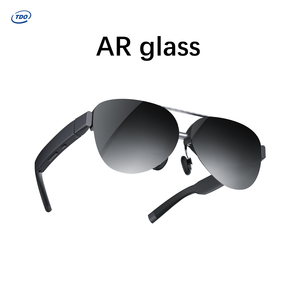
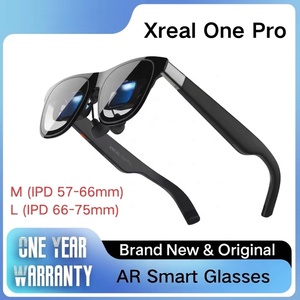
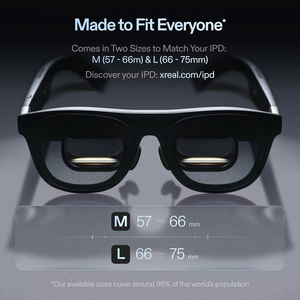
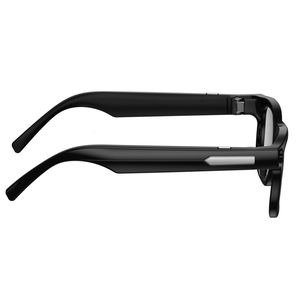
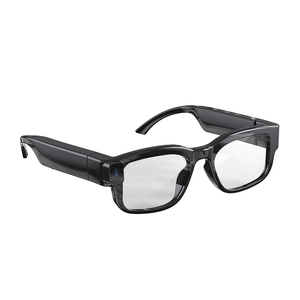
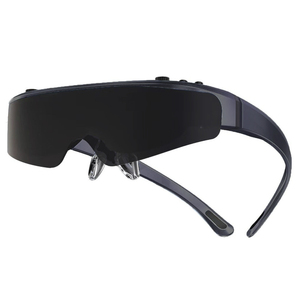
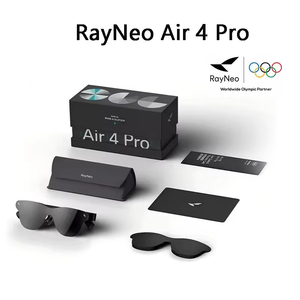
Furthermore, optical display engine developments have expanded the market beyond classical wristwear into spatial smart glasses. Devices utilizing micro-display projections (such as 171-inch virtual display visual engines paired with dual-mic environmental noise cancellation) allow buyers to capture growth in enterprise remote inspection, field operations, and immersive gaming.
As a verified on-site smart wearable manufacturer established in 2020 in Shenzhen, Guangdong, ZUMU Technology Co., Ltd. exemplifies the engineering depth required to service international brands across North America, Western Europe, Eastern Europe, Southern Europe, and the Middle East.
Operating from the Xiner Sports Center Complex in Xinqiao Street, Shenzhen, ZUMU Technology's premises are third-party audited, ensuring authentic business licensing, dedicated SMT assembly lines, cleanroom optical fitting environments, and transparent working conditions.
Every shipment batch undergoes rigorous quality testing protocols: 5ATM pressure tank immersion, 48-hour continuous thermal aging burn-in, 1.5-meter drop testing, and salt-spray corrosion validation. Full batch inspection reports are archived and supplied with export documentation.
ZUMU provides comprehensive customization from structural tooling modifications to software engineering. Capabilities include laser logo engraving, customized watch face design, dedicated iOS/Android APP branding, custom packaging layout, and multilingual manual localization.
Navigating global customs enforcement and product liability requires stringent regulatory documentation. Sourcing from a tier-one China smartwatch exporter guarantees that shipments arrive backed by full compliance portfolios ready for EU, US, and Middle Eastern entry:
Full CE-RED and FCC ID certification testing for Bluetooth Low Energy (BLE 5.3), Wi-Fi, and 4G LTE cellular modules, ensuring zero interference and compliant specific absorption rates (SAR).
Rechargeable lithium-ion polymer batteries used in smart rings, watches, and AR frames come fully tested with UN38.3 transport safety reports, Material Safety Data Sheets (MSDS), and IEC 62133 compliance certificates for seamless air and sea freight handling.
Enclosures and wrist straps comply strictly with RoHS 2.0 and REACH environmental standards, verifying the total absence of hazardous heavy metals, phthalates, or skin-sensitizing nickel compounds.
Detailed answers to the critical procurement, technical, and logistical questions encountered when sourcing smartwatches and wearables from China.
MOQ requirements are tailored to the customization depth. Ready-to-ship stock models (including smart rings and AR smart glasses) allow sample orders starting from 1 piece. Trial customized runs (logo laser engraving, custom startup screens) start at 50 to 500 pieces. Full private-label ODM projects involving customized tooling colorways, dedicated APP branding, and custom retail gift boxes typically start at 3,000 pieces per SKU.
Waterproof validation is conducted at the production batch level using computerized hydrostatic testing chambers. For 5ATM smart rings and dive-capable smartwatches, devices are pressurized inside water-filled tanks at 5 BAR (equivalent to 50 meters depth) for specified duration cycles. For IP68 watches, dust chambers and high-pressure water jet spraying are used to confirm full seal integrity before final assembly packaging.
Yes. ZUMU Technology provides end-to-end software integration. We offer branded iOS and Android companion applications customized with your company logo, color palette, cloud server location, and feature tabs. At the device firmware level, we configure your custom boot splash screen, localized language packs, customized watch face galleries, and Bluetooth broadcast names.
Every export shipment includes a commercial invoice, detailed packing list, Declaration of Conformity (DoC), and recommended Harmonized System (HS) code guidance. For regulated markets, we furnish complete test report binders including CE-RED, FCC ID, RoHS 2.0, REACH, UN38.3 (battery transportation), and MSDS sheets.
Sample orders from ready stock dispatch within 1 to 3 working days. Pre-production customized samples (with logo printing and custom packaging) take approximately 7 to 10 days. Once pre-production samples receive final sign-off, full mass production cycles typically range between 25 and 30 calendar days, supported by weekly video and photo production milestone updates.
Connect directly with ZUMU Technology's engineering and export sales teams in Shenzhen to receive technical datasheets, compliance portfolios, and volume quotation tiers for your target market.
Get Catalog