Direct factory supply, verified engineering specs, low-MOQ sampling for importers and brand owners.
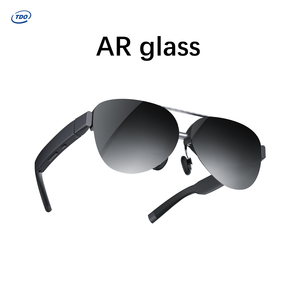
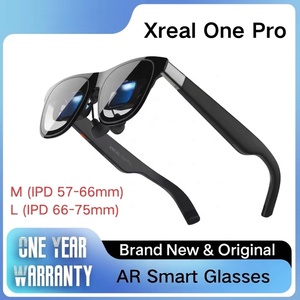
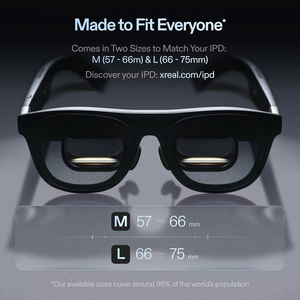
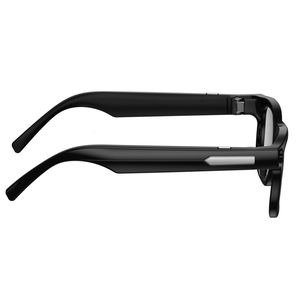
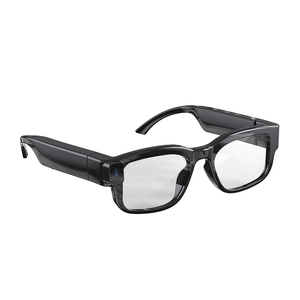
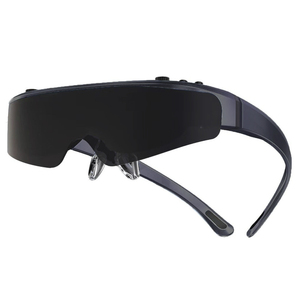
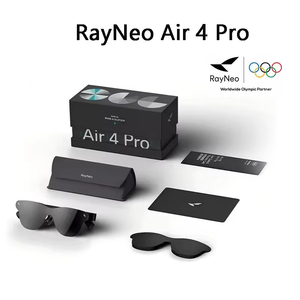
The augmented reality (AR) and smart eyewear industry is undergoing a structural paradigm shift. Driven by rapid advancements in optical engines, low-power spatial computing chips, and multimodal artificial intelligence (AI), China's manufacturing ecosystem—centered in Shenzhen and the broader Guangdong province—has evolved from simple assembly into complete end-to-end hardware R&D, optics customisation, and high-yield mass production.
For international buyers, B2B procurement managers, brand operators, and telecom distributors, navigating China's AR glasses factories requires a precise understanding of technical architecture, manufacturing validation protocols, and supply chain dynamics. Choosing the right OEM/ODM partner is no longer just about component prices; it is about guaranteeing thermal stability, optical alignment precision, firmware customization flexibility, and international regulatory compliance (CE, FCC, RoHS, UN38.3).
Key Procurement Takeaway: High-performing AR eyewear production requires tight integration between optical engine assembly (Birdbath vs Waveguide), micro-display calibration (Micro-OLED panel brightness), thermal management inside light frame architectures, and custom firmware optimization.
As a verified Guangdong-based smart wearable manufacturer established in 2020, ZUMU Technology Co., Ltd. represents the modern standard of high-precision electronic manufacturing in Shenzhen. Operating with in-house design, tooling, surface-mount technology (SMT), and cleanroom assembly lines, ZUMU Technology specializes in engineering smart rings, AI camera glasses, AI translation earbuds, and custom smart watches for global export markets spanning North America, Western Europe, Eastern Europe, Southern Europe, and the Middle East.
Unlike purely trading intermediaries, ZUMU Technology provides direct factory-floor transparency. Every batch undergoes rigorous quality assurance (QA)—including automated optical inspection (AOI), 5ATM and IP68 pressure tank validation, drop testing, salt-spray corrosion exposure, and a 48-hour continuous burn-in aging process before shipment. This industrial discipline guarantees that buyers receive consumer-ready products engineered to withstand global distribution rigors.
To gain a competitive edge in domestic and retail consumer markets, wholesale buyers must align their procurement roadmaps with upcoming technological trajectories. The next generation of AR smart glasses is moving rapidly toward all-day wearable ergonomic footprints, seamless generative AI integration, and hyper-bright micro-displays.
While Birdbath optics currently dominate budget cinema-style AR glasses due to high contrast, premium industrial and AI-first eyewear is transitioning to optical waveguides. Micro-LED displays paired with surface relief gratings (SRG) allow light transmission exceeding 85%, creating true transparent eyewear indistinguishable from classic prescription frames.
Smart glasses are rapidly shifting from passive extended screens into active AI visual assistants. Integrating 8MP camera sensors with low-latency Bluetooth 5.4 or Wi-Fi 6 modules enables real-time simultaneous translation, object recognition, contextual voice prompting, and instantaneous cloud upload without smartphone tethering delays.
The primary barrier to mass AR adoption has been heat dissipation near the user's temples and nose bridge. Modern manufacturers utilize magnesium-aluminum alloys, graphite heat spreaders, and split-battery frame geometry to maintain total frame weight under 75 grams while guaranteeing up to 4 hours of continuous video/spatial display runtime.
When requesting quotes or preparing customized OEM specifications from China factories, procurement teams must select the appropriate hardware architecture aligned with their end-user positioning. The table below details the performance parameters across standard manufacturing lines:
| Architecture Type | Display Technology | Peak Brightness | Primary B2B Use Case | Target Manufacturing MOQ |
|---|---|---|---|---|
| Birdbath Optics | Dual Micro-OLED (1080P / 4K) | 1200 - 4000 nits | Personal Virtual Theater, Gaming, Steam Deck / PC Monitor Replacement | 50 - 500 pcs (Stock / OEM) |
| Diffractive Waveguide | Monocular / Binocular Micro-LED | 2000 - 5000+ nits | Industrial Tele-Assistance, HUD Navigation, Live Prompting | 500 - 1,000 pcs (Custom Mould) |
| AI Camera & Audio Frame | Screenless / Audio-Visual AI | N/A (Camera + Mic Array) | Real-time Language Translation, Vlog Recording, AI Assistant | 1 - 50 pcs (Ready-Stock OEM) |
| Spatial Computing 3DoF/6DoF | Micro-OLED + IMU / SLAM Cameras | 1500 - 3000 nits | Enterprise Workspace Multitasking, Spatial AR Apps | 100 - 500 pcs |
Building a successful private-label smart wearable product line requires strict compliance with international trade protocols and technical design reviews. At ZUMU Technology Co., Ltd., we streamline the buyer journey through a 5-stage engineering workflow designed to eliminate risk from sample validation to mass delivery.
Define sensor selection (8MP camera, EIS stabilization, dual-mic noise reduction), optical display requirements, landed-cost budgets, and target regional certifications (CE, FCC, RoHS).
Hardware engineers verify circuit board layouts (PCB), battery safety protection, thermal dissipation pathways, and SDK compatibility for proprietary Android/iOS application connectivity.
A functional prototype featuring customized laser engraving, tailored UI watch/display faces, branded packaging artwork, and localized instruction manuals is produced for buyer sign-off.
Before issuing wire transfers or signing supply agreements, international sourcing officers should evaluate prospective factories against four fundamental operational metrics:
Clear responses to the most critical technical, commercial, and logistical questions asked by global B2B procurement managers.
Whether you need direct ready-stock sampling, wholesale bulk pricing, or full OEM/ODM optical development, our engineering and sales teams in Shenzhen are ready to serve your market.
Get a Quote