Directly source validated, high-gain smart wearables engineered for commercial deployment, brand licensing, and volume retail distribution.
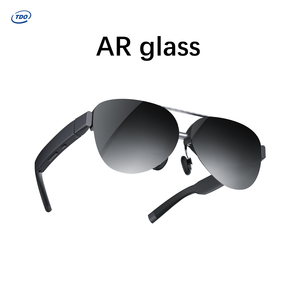
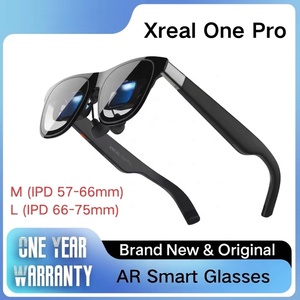
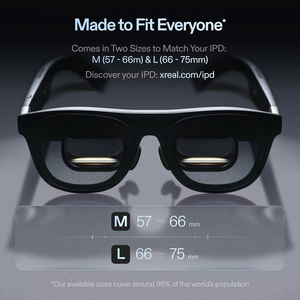
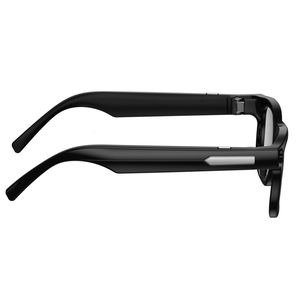
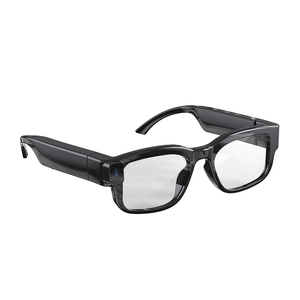
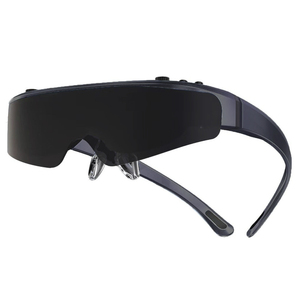
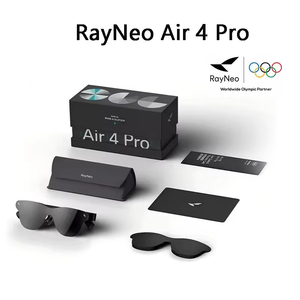
A definitive procurement framework detailing regulatory compliance under European Directive 2014/53/EU (RED), active-matrix OLED optical stack innovation, dynamic battery management, and original equipment manufacturing (OEM) integration standards.
The transition from legacy TFT-LCD smartwatches to CE Certified AMOLED Watch architectures represents a paradigm shift in B2B wearable procurement. Enterprise importers, consumer electronics brands, and IoT distributors face stringent regulatory hurdles within the European Economic Area (EEA). Compliance is no longer just about passing basic EMC tests; it requires comprehensive validation of Radio Equipment Directive (RED) protocols, EN 62479 human exposure standards, photobiological safety (EN 62471), and environmental RoHS/REACH compliance. Concurrently, advances in Low-Temperature Polycrystalline Oxide (LTPO) AMOLED panels demand revised engineering specifications for thermal dissipation, battery capacity matching, and custom micro-controller unit (MCU) firmware integration.
Headquartered in Shenzhen, Guangdong—the world’s premiere wearable hardware hub—ZUMU Technology Co., Ltd. operates state-of-the-art SMT lines, automated optical inspection (AOI) labs, and rigorous environmental testing chambers.
Global enterprise buyers must stay ahead of rapid hardware iterations. The integration of self-luminous organic light-emitting diode displays into wearable form factors has redefined user interface expectations, bio-sensor efficiency, and industrial design parameters.
Modern AMOLED smartwatches leverage Low-Temperature Polycrystalline Oxide (LTPO) backplanes to enable dynamic refresh rates scaling seamlessly from 1Hz up to 60Hz. This tech reduces display power draw by up to 35% during Always-On Display (AOD) modes. Furthermore, premium manufacturers integrate 3840Hz ultra-high frequency Pulse Width Modulation (PWM) dimming to eliminate flickering and prevent visual fatigue in low-light operational environments.
Leading CE certified wearable factories have shifted from single-green-LED photoplethysmography (PPG) modules to multi-channel multi-spectral arrays (infrared, red, and green diodes). Paired with low-power micro-neural network units (NPUs) built directly into the main SoC, modern AMOLED smartwatches perform real-time continuous SpO2 monitoring, heart rate variability (HRV) tracking, and preliminary sleep-apnea classification directly on the edge.
Engineering high-luminance AMOLED displays into water-resistant housings requires specialized dispensing techniques using structural liquid silicone rubber (LSR) gaskets and precision CNC-machined 316L stainless steel or aircraft-grade aluminum alloy bezels. Achieving verified 5ATM water resistance mandates multi-stage hydrostatic testing in pressure chambers to guarantee seal integrity under dynamic stress.
Use this comparative matrix to benchmark engineering parameters when issuing Requests for Quotation (RFQs) to OEM manufacturers.
| Specification Parameter | Standard AMOLED Smartwatch | Enterprise / Rugged AMOLED Watch | Next-Gen AI Glasses / AR Ecosystem |
|---|---|---|---|
| Display Technology | 1.43" Rigid AMOLED (466x466 px) | 1.96" Flexible LTPO AMOLED (502x410 px) | Micro-OLED / Binocular Optical Waveguide |
| Peak Luminance | 600 - 800 nits | 1000 - 1500 nits (Outdoor Sunlight Readable) | 1200 - 4000 nits (In-Lense Virtual Luminance) |
| Chassis Material | Zinc Alloy / ABS+PC Molded Polymer | 316L Stainless Steel / Titanium Alloy Frame | High-Index Polycarbonate / Magnesium Alloy |
| CE Certification Scope | RED 2014/53/EU, EN 62479, RoHS | RED 2014/53/EU, EN 62479, IP68/5ATM Lab Test | CE RED, FCC ID, Photobiological Safety EN 62471 |
| Battery & Charging | 300mAh - 450mAh (Magnetic 2-Pin Dock) | 500mAh - 700mAh (Fast Magnetic / Wireless) | Built-in Li-Po + Magnetic Charging Eyewear Case |
| Typical OEM MOQ | 500 - 1,000 units (Custom Packaging) | 1,000 - 3,000 units (Custom Mold/Firmware) | 50 - 500 units (Standard / Pilot Customization) |
Anticipating regulatory changes, consumer shifts, and technological leaps is essential for maintaining supply chain resilience and protecting brand equity.
By late 2026, the European Union's updated Battery Regulation will enforce full digital battery passports for rechargeable lithium devices exported into the EU. Importers must partner with manufacturers capable of supplying end-to-end trace data detailing cobalt sourcing, carbon footprint calculations, and strict UN38.3 transport safety compliance. Manufacturers like ZUMU Technology Co., Ltd. are already integrating compliant battery supply chains with full MSDS documentation to ensure frictionless customs clearance.
Hardware alone no longer guarantees product differentiation. Global procurement directors are increasingly selecting manufacturers that offer robust software customization layer solutions. This includes white-label mobile applications (iOS/Android), custom watchdog firmware, localized UI translation engines, and cloud API integration for corporate wellness platforms. Hardware suppliers offering modular SDKs drastically reduce a brand's time-to-market from 12 months down to under 8 weeks.
From conceptual industrial design to final retail packaging, our engineering division in Xinqiao Street, Shenzhen provides end-to-end OEM and ODM services tailored for international importers.
In-house 3D rapid prototyping, CNC housing milling, custom strap molding (fluoroelastomer, leather, mesh), and specialized color-matching (Pantone code alignment).
Pre-loaded multilingual UI sets, custom watch face creation, boot logo injection, and branded animation sequences optimized for active-matrix displays.
Strict ISO-aligned quality assurance covering incoming material inspection (IQC), in-process assembly quality control (IPQC), and 100% final outgoing checking (OQC).
Essential guidance addressing regulatory certifications, order minimums, waterproof testing, and supply chain logistics.
Our CE compliance package includes full test reports issued by accredited laboratory partners under European Directive 2014/53/EU (RED). This covers Radio Spectrum Efficiency (EN 300 328 for Bluetooth/Wi-Fi), Electromagnetic Compatibility (EN 301 489-1/-17), Electrical Safety (EN 62368-1), and Human Exposure/SAR Assessments (EN 62479 / EN 50663). Additionally, RoHS 2.0 (2011/65/EU) heavy-metal screen reports and battery UN38.3 shipping certificates are provided per order batch.
To support multi-tier business models, ZUMU Technology Co., Ltd. offers tiered MOQ structures. Ready-to-ship stock models and evaluation samples start from as low as 1 to 50 pieces. Custom laser-engraved logos or modified packaging projects start at 500 pieces. Full-custom manufacturing involving customized housing colors, bespoke watch face software, and tailored retail packaging typically begins at 3,000 pieces per SKU model.
We do not rely solely on sample-level laboratory testing. Every production batch undergoes 100% automated pressure-tank testing. Devices are subjected to positive air pressure displacement tests to detect micro-gaps around the display seal, glass lens, and sensor window. Random statistical samples from every shift are subjected to wet pressure hydrostatic immersion tanks up to 50 meters equivalent pressure for 5ATM rated models, guaranteeing field performance in real-world swimming and shallow-water environments.
Yes. We supply fully white-labeled companion applications compatible with iOS and Google Play architectures. Your dedicated account management team coordinates with our software engineers to customize application graphics, color schemes, app icons, privacy policy links, and cloud server back-end hosting parameters to align with your corporate infrastructure.
Ready-stock sample orders are dispatched within 3 business days following payment confirmation. Custom OEM mass production cycles generally run between 25 to 35 calendar days following golden sample sign-off and deposit receipt. This window includes component procurement, SMT assembly, automated optical inspection, 48-hour burn-in aging, waterproof testing, and final packaging packaging checks.