0%

Choosing the right Screenless Smart Bracelet supplier requires more than comparing factory prices or polished product photos. Global buyers need evidence of design experience, manufacturing consistency, communication quality, and responsible data practices. A bracelet may look minimal on a screenless display, yet its value depends on sensors, vibration feedback, battery stability, app integration, and user comfort.

Small details matter.

Dr. Joseph Kvedar, a respected digital-health expert, has said, “The future of health care is mobile.” His observation helps explain the growing interest in discreet wearable devices that support activity tracking, wellness routines, and connected experiences without a bright screen. For buyers, the strongest suppliers usually provide clear technical specifications, realistic sampling schedules, factory documentation, and responsive after-sales support. They should also explain how user data is handled and how products are prepared for different international markets.

This guide examines leading Screenless Smart Bracelet suppliers for global buyers. It considers production capacity, customization options, quality-control procedures, minimum order quantities, communication, and long-term reliability. A supplier with attractive pricing may still create delays through weak sampling or inconsistent firmware. That is easy to underestimate.

Practical evaluation remains essential. Request samples, test charging cycles, inspect strap materials, and compare vibration strength in everyday conditions. Ask whether the supplier can maintain the same performance across larger batches. No supplier is perfect. Even experienced manufacturers may need improvement in documentation, software support, or delivery forecasting. That honest limitation deserves attention, because dependable partnerships grow through verification, not promises alone.
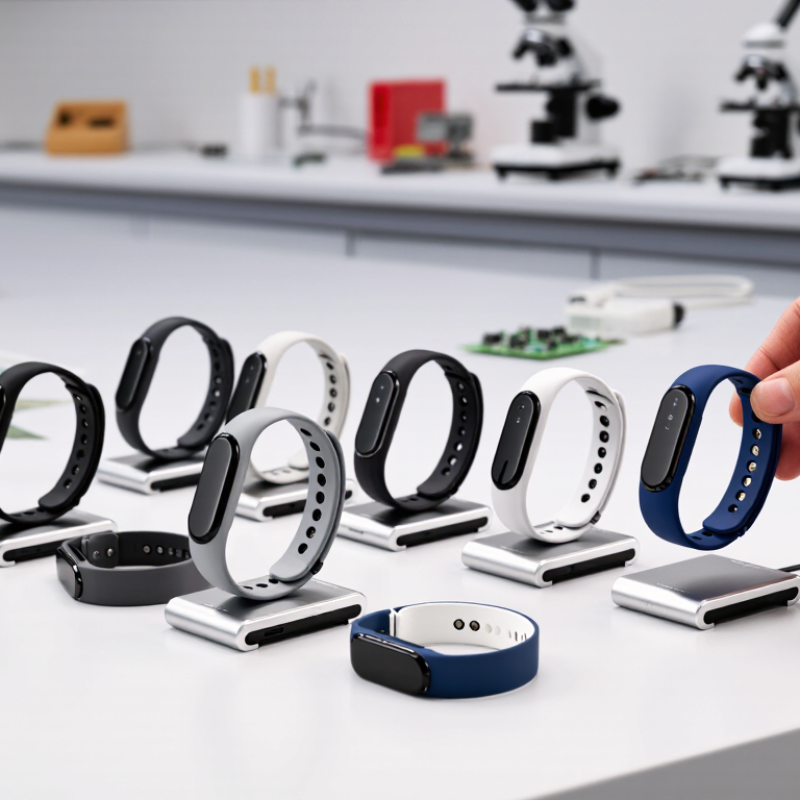
Top Screenless Smart Bracelet Suppliers for Global Buyers

What Are Screenless Smart Bracelets and How Do They Work?

Top Screenless Smart Bracelet Suppliers for Global Buyers

What Are Screenless Smart Bracelets and How Do They Work?

Screenless smart bracelets are lightweight wearables without a display. They collect movement, heart-rate, sleep, and sometimes skin-temperature data through embedded sensors. A small vibration motor or LED gives alerts. The bracelet sends detailed results to a mobile application through Bluetooth Low Energy. Users may notice a quiet vibration during a meeting instead of a bright screen.

IDC’s Worldwide Quarterly Wearable Device Tracker reported more than 500 million wearable devices shipped globally in 2023. This figure shows strong demand for compact health and activity tools. However, shipment data usually combines watches, bands, and other devices. It does not measure screenless bracelets alone. That limitation matters when global buyers compare supplier claims.

A reliable bracelet depends on sensor quality, firmware stability, battery performance, and secure data handling. Optical sensors estimate pulse by reading light changes under the wrist. Motion sensors count steps and help identify sleep patterns. These results are estimates, not clinical diagnoses. The Global Wellness Institute valued the global wellness economy at $5.6 trillion in 2022, suggesting wider interest in personal health tracking. Still, screenless designs are not perfect. Sweat, loose fitting, skin tone, and vigorous movement can reduce accuracy. Buyers should request test reports, battery-cycle data, app compatibility details, and clear privacy policies before placing large orders.

Key Features and Applications of Screenless Smart Bracelets

Screenless smart bracelets focus on quiet, glance-free interaction instead of bright displays. In supplier evaluations, I check vibration strength, sensor consistency, battery life, and charging design. These details affect daily use more than a polished product description. Haptic alerts can signal calls, reminders, navigation turns, or scheduled tasks. Small indicator lights may show charging status or connection errors. Many models track steps, heart rate, sleep patterns, and movement. However, readings can change with loose fitting, skin moisture, or intense exercise. They should support wellness routines, not replace professional medical advice.

Their applications are practical in offices, fitness programs, hospitality, and personal safety routines. A discreet vibration can notify staff without interrupting a meeting or public interaction. Fitness users may prefer a lighter device during running, cycling, or strength training. Care teams can also use selected features for reminders, but consent and data protection require careful planning. I recommend checking app compatibility, export options, firmware support, and privacy controls before ordering samples. Suppliers should provide clear testing records and realistic battery estimates. Waterproof ratings need verification under actual use conditions.

One limitation remains. Without a screen, users depend heavily on a phone or preset signals. That feels elegant for some buyers, but inconvenient for others. Supplier claims still need hands-on testing.

How to Evaluate Screenless Smart Bracelet Suppliers

Top Screenless Smart Bracelet Suppliers for Global Buyers

How to Evaluate Screenless Smart Bracelet Suppliers

Supplier evaluation should begin with evidence, not attractive product photos. IDC’s Worldwide Quarterly Wearable Device Tracker reported 537.7 million wearable devices shipped globally in 2024, an 11.3% annual increase. This growth raises quality pressure.

Request three production samples from different batches. Check sensor readings after exercise, sleep, and low-battery conditions. Test the vibration motor through clothing. Test the basics. A supplier should provide battery capacity, charging cycles, waterproof ratings, and component specifications. Missing documents deserve careful questions.

Ask for independent testing records covering radio performance, battery safety, and material contact. Requirements differ across destination markets, so suppliers should explain their testing scope clearly. Review firmware update procedures and data-handling controls. A screenless bracelet depends heavily on its mobile application. Check pairing time, notification reliability, language support, and offline data storage.

Bluetooth SIG’s 2024 Market Update projected 5.4 billion Bluetooth-enabled device shipments for 2024, showing how important stable wireless performance has become. Numbers can mislead. A low quoted price may hide high defect rates, tooling charges, or expensive replacement logistics.

Request a pilot order with written acceptance standards, inspection rights, lead times, and warranty response targets. I would also examine factory capacity during peak seasons. A supplier may pass one audit and still struggle with ten thousand units. That uncomfortable gap needs testing, not optimism.

Leading Supplier Types for Global Buyers

Global buyers can choose from several supplier types when sourcing screenless smart bracelets.

OEM manufacturers build products from approved specifications and support stable, repeat production. ODM suppliers offer existing designs, allowing buyers to adjust sensors, straps, packaging, and software features. This route can reduce development time, but customization may remain limited.

Specialized component manufacturers focus on functions such as motion tracking, heart-rate sensing, charging modules, or waterproof housings. Their technical depth can improve reliability, especially for fitness and wellness applications.

Contract manufacturers are another practical option. They often coordinate assembly, testing, packaging, and production scheduling under one agreement.

Some trading suppliers also connect buyers with factories and manage export documents. Their convenience is useful, but factory visibility may be weaker.

Experienced buyers should request working samples, factory audit records, test reports, and clear production tolerances.

Check battery safety, skin-contact materials, water-resistance claims, data handling, and regional compliance requirements. Ask how suppliers manage failed units and firmware updates.

Small trial orders reveal more than polished presentations.

No supplier is perfect. Even reliable factories can miss a color shade, delay a component, or misunderstand a feature.

A written specification, inspection plan, and realistic lead time reduce these risks.

Suppliers that answer technical questions with evidence usually deserve closer consideration.

Steps for Sourcing and Importing Screenless Smart Bracelets

Screenless smart bracelets require disciplined sourcing because the hardware looks simple, but the supply chain is not. IDC estimated 537.9 million wearable devices shipped worldwide in 2024, showing strong demand beyond traditional watches. Bluetooth SIG also reported 5.4 billion Bluetooth devices shipped in 2023. These figures support market potential, but they do not guarantee product quality.

Start by writing a precise specification sheet. Include sensor types, battery capacity, charging method, strap material, waterproof rating, app language, and Bluetooth version. Request samples from at least three audited suppliers. Check heart-rate consistency, vibration strength, charging temperature, and battery performance over seven days. Test the bracelet on different wrist sizes. Small details matter.

Ask for factory photos, quality records, component origins, and recent test reports. Verify whether the supplier owns production equipment or outsources assembly. My early sourcing mistake was accepting attractive sample data without testing the mobile app. The connection failed after several hours. That was expensive. Do not repeat it.

Before importing, confirm the correct customs classification with a qualified broker. Review product safety, battery transport, labeling, radio, and data privacy requirements in the destination market. Agree on inspection standards, defect limits, packaging dimensions, Incoterms, payment stages, and replacement terms. Use a pre-shipment inspection before releasing the final balance. Keep serial numbers and test records for traceability. Supplier claims are useful, but independent evidence is better.

FAQS

What is a screenless smart bracelet designed to do?

It uses vibrations and small lights instead of a display.

Which health and activity features may these bracelets provide?

Common features include step counting, heart-rate tracking, sleep monitoring, and movement detection.

How should buyers evaluate a supplier?

Request samples from different production batches.

What should buyers test on physical samples?

Test vibration through clothing and on different wrist sizes.

Why is the mobile application important?

The bracelet depends heavily on its application for pairing and notifications.

How can buyers verify battery and waterproof claims?

Request battery capacity, charging-cycle data, and realistic usage estimates.

What import and compliance details require attention?

Confirm customs classification with a qualified broker.

What should a pilot order include?

Use written acceptance standards, defect limits, lead times, and warranty response targets.

What are the main limitations of a screenless bracelet?

Users often depend on a phone or preset vibration signals.

Conclusion

Screenless Smart Bracelet products combine discreet wearable design with sensors that track health, activity, sleep, and other personal metrics without relying on a traditional display. Data is typically transferred to a mobile application through wireless connectivity, allowing users to review trends, receive notifications, and manage settings from their phones. Their lightweight, low-distraction format makes them suitable for fitness, wellness, lifestyle, workplace, and promotional applications.

For global buyers, selecting reliable Screenless Smart Bracelet suppliers requires evaluating product quality, sensor performance, battery life, connectivity, customization options, production capacity, certifications, communication, and after-sales support. Buyers may work with specialized manufacturers, OEM/ODM providers, trading companies, or technology solution partners, depending on their budget and project needs. A successful sourcing process should include defining specifications, requesting samples, verifying supplier credentials, confirming packaging and shipping terms, reviewing import requirements, and conducting quality inspections before shipment.


Amelia

Amelia

Amelia is a highly skilled marketing professional dedicated to helping customers better understand the value, quality, and practical applications of our company’s products. With extensive knowledge of product development, market trends, customer needs, and digital communication, she creates clear,......