Choosing the best Smart Health Ring in 2026 is not as simple as comparing sensor counts. A ring may track sleep, heart rate, temperature trends, activity, and recovery. However, impressive specifications do not guarantee useful daily insights.
This guide examines leading models through practical experience and evidence-based criteria. We consider comfort during sleep, battery life, app clarity, subscription costs, data privacy, and measurement consistency. A ring should feel almost invisible on your finger. It should also explain changes clearly, rather than flooding you with confusing scores. Independent testing remains important, because manufacturer claims can vary between devices and conditions.
No wearable is perfect. Skin temperature can shift with illness, room temperature, or a loose fit. Sleep estimates may differ from clinical equipment. That matters. Smart rings can support personal awareness, but they should not replace professional medical advice or diagnosis. We will also question whether every feature deserves your money. Some users may value recovery trends, while others may prefer simple activity tracking without another monthly fee.
The best choice depends on your body, routine, priorities, and tolerance for limitations. A runner may need dependable recovery data. A frequent traveler may prioritize battery life and comfort. Someone focused on sleep may care more about gentle design than workout tools. By comparing real-world usability with technical capability, this overview aims to identify which Smart Health Ring offers the most balanced value in 2026. Be skeptical. Your data deserves careful judgment.
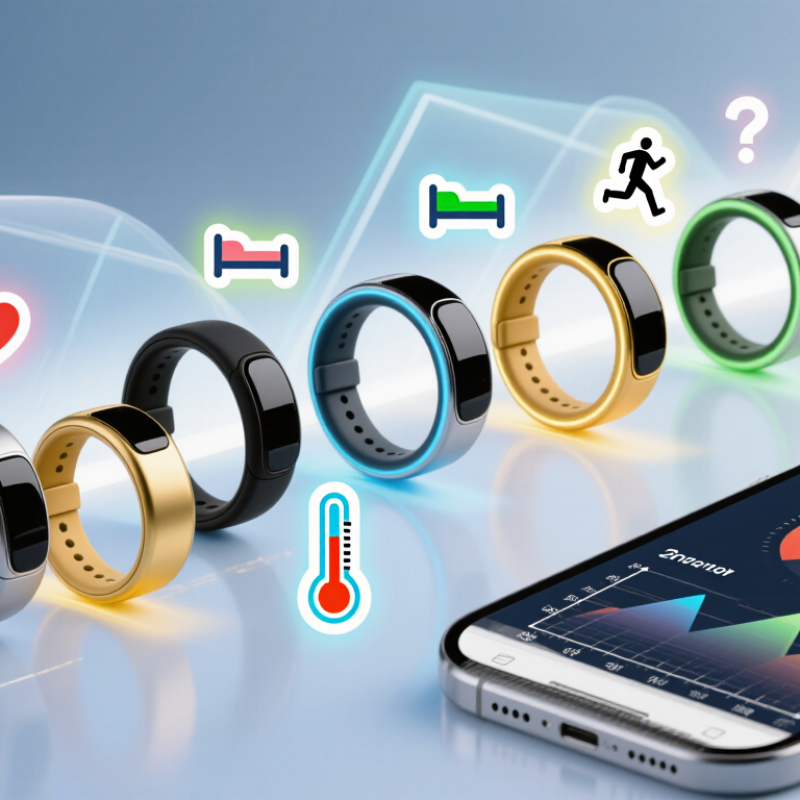
What Is the Best Smart Health Ring in 2026?
A smart health ring is a small wearable that tracks body signals from your finger. It usually uses optical sensors to estimate heart rate and blood oxygen. A skin-temperature sensor can notice subtle changes during sleep or illness. Motion sensors record steps, restlessness, and exercise patterns. The ring sends this information to a phone application for analysis.
The finger is useful because it has strong blood circulation. Light sensors can detect tiny blood-volume changes with each heartbeat. Algorithms then estimate resting heart rate, heart-rate variability, sleep stages, and recovery trends. These results are not direct medical measurements. They are informed estimates based on repeated readings.
Fit matters more than many people expect. A loose ring may produce gaps during sleep or exercise. A snug fit can improve contact, but it should never feel painful. In daily use, I would check whether the ring remains comfortable while washing dishes, commuting, and sleeping. Sweat, cold hands, skin movement, and charging gaps can affect accuracy. Small mistakes happen.
The best smart health ring in 2026 should offer clear data, sensible explanations, and strong privacy controls. It should show trends instead of creating unnecessary alarms. A high recovery score does not prove perfect health. A poor sleep score does not explain every tired morning. Users should compare readings with symptoms and professional medical advice when concerns continue. Data can guide better questions, but it cannot replace clinical judgment.
| Evaluation Area | Typical 2026 Capability | How It Works | Practical Value |
|---|---|---|---|
| Heart-rate monitoring | Continuous or periodic heart-rate readings, with resting-heart-rate trends. | Green or red LEDs illuminate the skin, while photodiodes measure changes in reflected light caused by blood flow. | Useful for observing recovery, sleep trends, and changes from a personal baseline; not a replacement for clinical testing. |
| Heart-rate variability | Usually calculated during rest or sleep rather than during all-day activity. | Software analyzes small variations in the time between successive heartbeats detected by the optical sensor. | Can support recovery and stress tracking when interpreted over several days instead of as a single reading. |
| Sleep tracking | Sleep duration, bedtime, wake time, movement, and estimated sleep stages. | Algorithms combine motion, heart rate, heart-rate variability, and sometimes skin-temperature data. | Often one of the strongest use cases because a ring is small, quiet, and comfortable to wear overnight. |
| Blood oxygen estimation | Overnight or periodic oxygen-saturation estimates on models equipped with suitable optical sensors. | Red and infrared light measurements estimate the proportion of oxygenated hemoglobin in the blood. | May reveal unusual overnight patterns, but movement, fit, circulation, and skin contact can affect accuracy. |
| Skin-temperature trends | Relative overnight temperature changes rather than a general-purpose body-temperature reading. | A temperature sensor measures changes at the finger surface and compares them with the wearer’s baseline. | Can help identify changes related to environment, recovery, menstrual-cycle patterns, or illness; it is not a diagnostic thermometer. |
| Movement and activity | Steps, inactive periods, general activity, and selected workout recognition. | A three-axis accelerometer and, on some models, a gyroscope detect movement and orientation. | Suitable for daily activity trends, but a ring usually provides fewer live workout controls than a smartwatch. |
| Electrocardiogram capability | Not universal; available only on selected designs and in approved regions. | Electrical sensors detect cardiac signals when the wearer completes a specific measurement procedure. | Potentially useful for recording certain rhythm information, but regulatory clearance and medical interpretation are essential. |
| Battery life | Commonly about 4–8 days per charge, depending on sensors, size, and software settings. | A small rechargeable lithium-based battery powers the sensors, processor, memory, and Bluetooth connection. | Longer battery life improves sleep coverage and reduces charging interruptions. |
| Water resistance | Many models provide water resistance around 5 ATM, although limits vary by product. | Seals and pressure-tested construction protect internal electronics from water exposure within the stated rating. | Suitable for handwashing, rain, and many swimming situations when the manufacturer permits it; water resistance is not permanent. |
| Size and comfort | Typically lightweight, with many products weighing roughly 2–6 grams depending on size and materials. | Sensors are placed inside the ring so they maintain contact with the finger while the device remains screen-free. | A comfortable fit is critical for reliable readings and consistent overnight wear. |
| Data synchronization | Bluetooth synchronization with a mobile application; the ring may store data temporarily when the phone is not nearby. | The ring records sensor data locally and transfers encrypted summaries or measurements to a companion application. | Check phone compatibility, account requirements, cloud storage, and subscription terms before purchase. |
| Best overall use case | Passive wellness tracking focused on sleep, recovery, heart-rate trends, and daily readiness. | Multiple sensors collect data continuously, while algorithms convert raw signals into personal trends and scores. | The best choice is the model with dependable measurements, comfortable sizing, suitable battery life, transparent data policies, and no unsuitable recurring cost. |
Note: Smart health rings provide wellness estimates and trend information. They should not be used to diagnose, treat, or monitor a medical condition without guidance from a qualified healthcare professional.
Sleep duration is a practical starting point. It shows whether your routine allows enough recovery time. Weekly patterns matter more than one poor night. Sleep stages add context, but they remain estimates.
They may reveal stress, illness, or training strain. A higher resting rate after several poor nights deserves attention. Lower HRV can have several causes. Context matters.
Skin temperature may support cycle or illness awareness. Room temperature can distort it. Blood oxygen estimates may miss important symptoms. Never treat them as clinical testing.
Steps are easy to understand, but intensity often matters more. A ten-minute walk after dinner may be valuable. Chasing a fixed number can become distracting.
Rings combine movement, heart rate, temperature, and breathing signals. Bedtime and waking estimates are often useful. Brief awakenings remain debatable. Sleep scores are not medical results.
Focus on heart-rate trends, recovery estimates, and workout detection. Cold fingers, loose fitting, motion, and tattoos may affect readings. Small sensors are not perfect.
Very important. Frequent charging creates gaps in your record. A secure fit should not leave painful marks. Swollen fingers can make sizing difficult after exercise. Comfort wins.
Check storage practices, account controls, deletion options, and export features. Clear privacy settings build trust. I may value accuracy, then regret weak data controls later.
It can suggest patterns, not issue commands. I once trained while exhausted because of a reassuring score. That was a mistake. Symptoms and professional advice deserve priority.
Compare several weeks of data before reacting. Check fit, charging consistency, room temperature, and recent stress. One strange night proves little. Serious concerns need validated medical advice.
A Smart Health Ring is a lightweight wearable designed to collect health and wellness data continuously through discreet sensors. It can monitor signals such as heart rate, heart rate variability, sleep stages, body temperature trends, blood oxygen levels, activity, and recovery patterns. By combining these measurements with personal baselines, the ring can help users understand changes in daily wellness rather than focusing only on isolated numbers. The most valuable metrics depend on individual goals, but reliable sleep, recovery, cardiovascular, and activity insights are generally central to a useful experience.
When comparing smart health rings in 2026, users should consider measurement accuracy, battery life, comfort, sizing, app quality, data privacy, subscription requirements, and compatibility with their devices. The best choice will vary by need: sleep-focused users may prioritize comfort and detailed sleep analysis, active users may value recovery and exercise tracking, while those seeking everyday wellness may prefer simplicity and long battery life. A thoughtful decision should balance features, usability, cost, and long-term consistency.