The search for the best Ceramic Smart Ring from China begins with evidence, not polished product photos. The global wearable market is expanding, but smart rings remain a focused and competitive category. IDC’s Worldwide Quarterly Wearable Device Tracker reported approximately 538 million wearable-device shipments worldwide in 2024. Counterpoint Research also identified smart rings as one of the fastest-growing wearable segments during the same period. These figures show strong interest, yet they do not prove that every ring offers reliable health insights.
Ceramic matters because it feels smooth against the skin, resists visible scratches, and keeps a discreet, jewelry-like appearance. A strong Chinese model should combine accurate sensors, stable Bluetooth connectivity, useful battery life, and a well-supported mobile application. It should also provide clear information about testing, data protection, charging safety, and regional compliance. Grand View Research forecasts continued growth in the smart ring market through the decade, but forecasts are not guarantees. They can overlook software problems or disappointing after-sales service.
Real-world testing is essential. A ring may feel comfortable during sleep, then become awkward during exercise or hand washing. Battery claims may also change with frequent measurements. Small details matter. The best choice depends on comfort, sensor consistency, app quality, and trustworthy support. I would not judge a Ceramic Smart Ring by material alone. That would be too simple. Chinese manufacturers offer impressive engineering and competitive pricing, but independent reviews, transparent specifications, and long-term user experience still deserve closer attention.
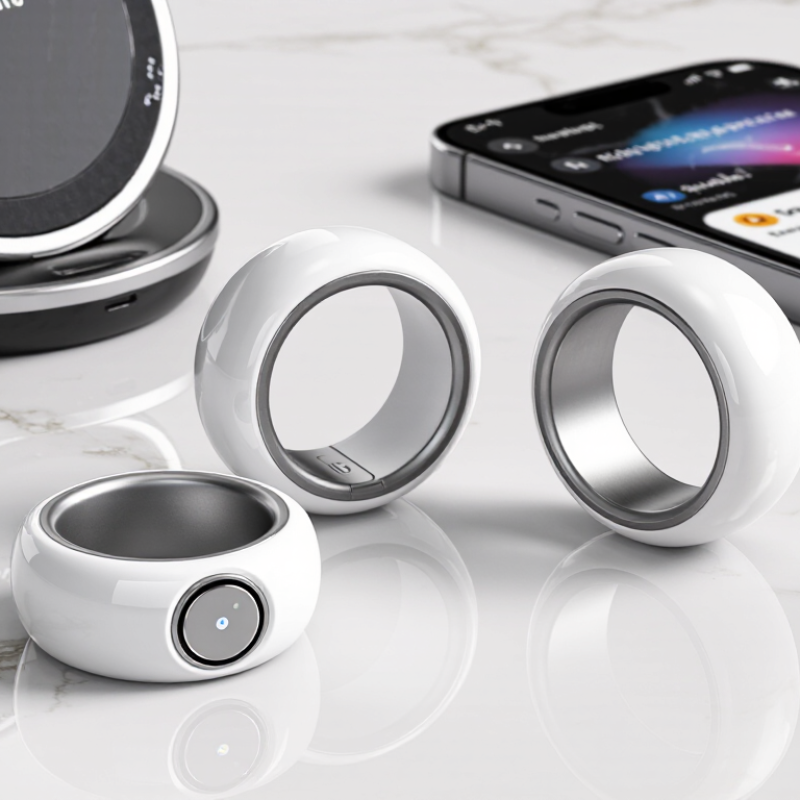
Key Features of China-Made Ceramic Smart Rings
When comparing the best ceramic smart ring from China, material quality deserves close attention.
A strong ring often uses scratch-resistant zirconia ceramic with a smooth inner surface. It should feel light, not cold or sharp, against the skin. Check the finish around the sensor area. Small gaps can collect moisture and dust.
The key features are practical, not decorative. Useful sensors may track heart rate, sleep stages, skin temperature, movement, and blood oxygen trends. These readings should support wellness tracking, not replace medical advice. Battery life commonly ranges from several days to more than a week, depending on sensor frequency. A compact charging case is helpful during travel. Water resistance matters too, but always confirm the stated rating and testing conditions.
Software can decide whether the ring remains useful.
Look for stable Bluetooth pairing, clear graphs, exportable data, and regular security updates. The app should explain how it stores and processes personal information. Independent testing reports add credibility, especially for battery safety and water resistance. No ring is perfect. Ceramic can resist scratches, yet it may crack after a hard impact. Sensor accuracy can also change with loose sizing, cold fingers, or active movement. A careful buyer should test comfort, charging speed, and app reliability before trusting long-term measurements.
How Ceramic Smart Rings Work and Track Health Data
What Is the Best Ceramic Smart Ring from China?
A ceramic smart ring should be judged by its health-tracking system, not appearance alone. Ceramic feels smooth, resists everyday scratches, and stays comfortable against the skin. However, its performance depends on sensor quality, software calibration, and a secure fit. A loose ring can produce unreliable readings. A tight ring may become uncomfortable during sleep.
Inside the ring, optical sensors shine small amounts of light into the finger. Photodiodes measure changing blood flow, helping estimate heart rate and heart-rate variability. A skin-temperature sensor detects gradual temperature changes, while an accelerometer records movement, rest, and possible sleep interruptions. The ring sends this information through Bluetooth to a mobile application. Algorithms then turn raw signals into estimates for sleep stages, activity, recovery, and daily readiness. The process sounds simple. It is not.
In practical use, the most useful data appears as a trend across several days, rather than a single score. A warm room, cold fingers, alcohol, illness, or poor placement can affect measurements. I would treat breathing and sleep insights as helpful guidance, not medical proof. The app should explain its methods, protect personal data, and show when readings are incomplete. Independent testing would strengthen trust, yet many consumer products provide limited public validation. Charging habits matter too. A ring that stops recording every few days cannot offer a reliable health picture.
What Is the Best Ceramic Smart Ring from China?
Ceramic smart rings use optical heart-rate sensors, accelerometers, and skin-temperature sensors to estimate sleep and recovery indicators. The ceramic shell provides a durable, skin-friendly housing, while the electronics perform the actual measurements.
The chart shows commonly reported adult overnight sleep-stage ranges: light sleep is typically the largest portion, followed by REM and deep sleep. These are general reference ranges, not medical diagnoses or readings from a specific ring. Smart rings infer sleep stages from movement, heart-rate patterns, and related signals.
Comparing Leading Chinese Ceramic Smart Ring Options
What Is the Best Ceramic Smart Ring from China? The answer depends on comfort, sensors, software, and after-sales support. Ceramic feels smooth against the skin and resists everyday scratches, but it can crack after a hard impact. That trade-off matters during workouts, travel, and sleep.
Comparing leading Chinese ceramic smart ring options requires practical testing. Check whether the ring measures heart rate continuously, records sleep stages, and exports usable data. Look for clear charging instructions and stable phone compatibility. IDC’s Worldwide Quarterly Wearable Device Tracker reported 537.9 million wearable shipments in 2024, showing strong demand for smaller health devices. However, the report covers wearables broadly, not ceramic rings alone. That limitation should stay visible.
Battery claims need careful reading. A ring promising seven days may last fewer days with frequent measurements and automatic workouts. Counterpoint Research has identified smart rings as an emerging wearable category, supported by growing interest in discreet health tracking. Still, many Chinese models provide less independent validation than established medical devices. I would compare sensor consistency with a trusted home monitor across several mornings. Small differences are normal. Large differences deserve caution. Also inspect the ceramic edges, charging pins, app translation, privacy policy, and replacement process before purchasing. The best option is rarely the one with the longest feature list. It is the one that remains comfortable, understandable, and reliable after several weeks.
Factors for Choosing the Best Ceramic Smart Ring
Choosing the best ceramic smart ring starts with comfort, not technical excitement. Ceramic should feel smooth against the skin, with no sharp inner edge. Check the ring’s weight and thickness before ordering. A bulky design may become annoying during sleep or typing.
Sensor accuracy deserves careful testing. Look for reliable tracking of heart rate, sleep stages, temperature changes, and activity levels. One reading proves little. Compare results with a trusted medical device when practical, but do not treat the ring as a diagnostic tool. Battery life also matters. A ring that needs charging every day can quickly lose its value. Several days of real use is more useful than an impressive laboratory claim.
Water resistance, skin safety, and data protection should receive equal attention. Confirm the stated resistance rating and follow its limits around hot water or chemicals. Ceramic can resist scratches, but it may crack after a hard impact. That detail is easy to overlook. Check whether the companion application explains data storage, sharing, and deletion clearly. Independent testing, transparent specifications, and responsive customer support suggest stronger reliability. Still, reviews may be incomplete, and personal results can vary. A perfect ring is unlikely. Choose the one that fits your routine, your finger, and your tolerance for small compromises.
Buying, Pairing, and Maintaining a Ceramic Smart Ring
What Is the Best Ceramic Smart Ring from China?
Choosing a ceramic smart ring requires more than comparing sleep scores. IDC’s Worldwide Quarterly Wearable Device Tracker reported over 500 million wearable shipments globally in 2023. Smart rings remain a smaller category, so testing quality can vary widely. Look for documented sensor methods, battery estimates, app compatibility, and a clear return policy.
Ceramic surfaces resist scratches and feel comfortable against skin. However, ceramic can crack after a sharp impact. Check the ring size carefully. A loose fit may weaken heart-rate and sleep readings.
Pairing should be simple, but not always.
The Bluetooth SIG 2024 Market Update forecasts annual Bluetooth device shipments rising from 5.4 billion in 2023 to 7.6 billion by 2028. This supports broad Bluetooth availability, not perfect ring compatibility.
Charge the ring before pairing. Install the official companion app from a trusted source. Keep Bluetooth and location permissions active when required. Then test one measurement, such as resting heart rate.
I once treated a successful connection as proof of accuracy. That was careless.
Tips:
Wipe the ceramic body with a soft, slightly damp cloth after exercise. Dry the charging contacts completely. Avoid abrasive cleaners, extreme heat, and heavy impacts.
Review battery performance monthly. If readings suddenly change, compare them with your usual pattern and check the fit.
The FDA notes that consumer wellness devices are not substitutes for clinical diagnosis. Export important data regularly, because app updates can change settings or erase local records.
FAQS
Check comfort, sensor coverage, battery life, app compatibility, privacy settings, and return support. The best choice is rarely the one with the longest feature list.
Ceramic usually feels smooth and resists ordinary scratches. Check the inner edge, weight, thickness, and size before ordering. Bulky rings can become irritating during sleep or typing.
Accuracy varies between models and personal fit. Compare resting heart rate with a trusted home monitor across several mornings. One reading proves little.
No. It is a wellness tracking tool, not a diagnostic device. Use unusual readings as signals for further attention, not as medical conclusions.
Real battery life may be shorter than the advertised estimate. Frequent measurements, automatic workouts, and notifications can reduce runtime. Several days of use is more practical than a laboratory claim.
Confirm the stated resistance rating and follow its limits carefully. Avoid hot water, chemicals, and situations outside the instructions. Water resistance is not unlimited protection.
Charge the ring before pairing and install the companion app from a trusted source. Enable Bluetooth and required permissions, then test one simple measurement. A successful connection does not prove accuracy.
Wipe the body with a soft, slightly damp cloth after exercise. Dry the charging contacts completely. Avoid abrasive cleaners, extreme heat, and hard impacts.
Check the ring’s fit, charging level, skin contact, and recent app changes. Compare the result with your usual pattern and another trusted monitor. I once treated a connection problem as an accuracy problem. That was careless.
Read how the app stores, shares, and deletes your information. Export important records regularly because updates may alter settings or remove local data. Small details matter.
Conclusion
A Ceramic Smart Ring from China can combine elegant design, durable materials, and practical health-tracking functions in a compact wearable. Its ceramic body is typically lightweight, smooth, scratch-resistant, and comfortable for daily use. Inside, sensors may monitor data such as heart rate, sleep patterns, activity levels, skin temperature, and blood oxygen trends. The ring sends this information to a mobile application through wireless pairing, where users can review measurements, observe long-term changes, and manage personal wellness goals. Because readings can vary by device and user, the data should be treated as general wellness information rather than a medical diagnosis.
When comparing Chinese Ceramic Smart Ring options, buyers should consider sensor performance, battery life, charging design, app compatibility, wearing comfort, water resistance, privacy protection, and after-sales support. The correct size is essential for reliable contact and comfortable use. Buyers should also check compatibility with their phone before purchase, follow the pairing instructions, and keep the ring clean and dry according to its care guidelines. With proper selection and maintenance, a ceramic smart ring can offer a discreet and convenient way to understand everyday health and activity patterns.