0%

AI Smart Glasses are moving from experimental hardware toward practical tools for communication, navigation, translation, and hands-free work. Global buyers now face crowded product pages, unclear specifications, and different regional requirements. The market is growing, but the information is not always equally mature.

Reports from IDC’s Worldwide AR/VR Headset Tracker and Grand View Research indicate continued expansion in smart eyewear and extended-reality devices. Meanwhile, Counterpoint Research has highlighted strong consumer interest in camera-enabled smart glasses and voice-based features. These findings suggest real momentum, not just conference-room excitement. However, forecasts often combine different product categories. That makes direct comparison difficult.

Look closely.

A suitable pair should match its daily environment. A warehouse worker may value impact resistance, battery endurance, and clear voice capture. A traveler may prioritize live translation, prescription-lens support, and reliable smartphone compatibility. Buyers should also check regional app availability, warranty coverage, charging standards, privacy indicators, and data-handling policies. Independent testing matters because a polished specification sheet cannot reveal uncomfortable nose pressure after six hours.

This guide presents ten practical AI Smart Glasses buying tips for international buyers. It connects market evidence with real purchasing decisions, including optical quality, connectivity, software support, durability, security, and after-sales service. Some recommendations will remain subjective. That is unavoidable. No single benchmark measures comfort, trust, and usefulness together. A careful buyer should question impressive claims, request verifiable documentation, and test the glasses under realistic lighting, noise, and temperature conditions. The best choice is rarely the most advanced model; it is the model that performs consistently in the buyer’s actual routine.
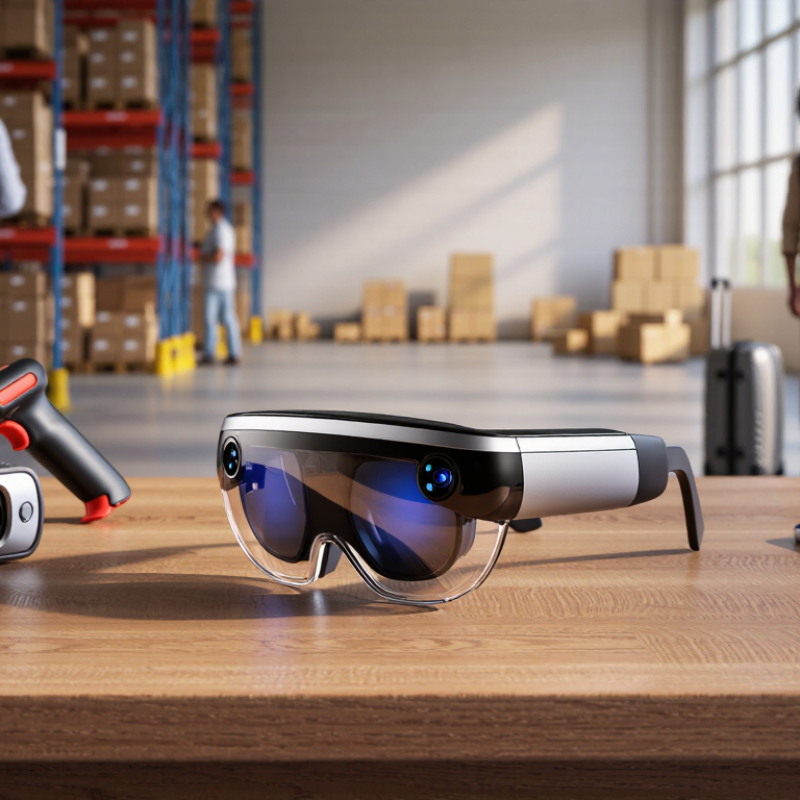
10 AI Smart Glasses Buying Tips for Global Buyers?

Understand AI Smart Glasses and Their Core Features

10 AI Smart Glasses Buying Tips for Global Buyers

Understand AI Smart Glasses and Their Core Features

AI smart glasses combine cameras, microphones, speakers, sensors, and software in a wearable frame. They can answer questions, describe objects, translate speech, and record short notes. Some models also project information near the user’s vision. Others rely only on audio feedback.

Check the camera resolution, microphone performance, and speaker clarity in realistic places. A quiet showroom can hide problems. Test voice commands beside traffic, in bright sunlight, and inside a crowded café. AI may misunderstand accents, background noise, or mixed languages. That limitation matters for international buyers. Translation can also sound unnatural or miss cultural meaning.

Battery capacity affects daily usefulness. Frequent camera or AI features may reduce operating time quickly. Look for charging details, replacement options, and heat during extended use. Comfort requires practical checking too. Frames should stay stable when walking, while nose pads should not create pressure after an hour. I would also examine the companion application, supported languages, wireless compatibility, and data controls. Features may vary by country, network, or software version. That part is often overlooked.

Privacy deserves careful attention. Confirm when cameras activate, where recordings are stored, and how users can delete them. A visible status light can help nearby people understand when recording occurs. Still, technical safeguards are never perfect. Read independent testing reports and user feedback, not only product specifications. Small weaknesses often appear after weeks of ordinary use.

Define Your Use Case, Budget, and Essential Requirements

10 AI Smart Glasses Buying Tips for Global Buyers

Define Your Use Case, Budget, and Essential Requirements

Begin with the task, not the technology. Decide whether you need hands-free translation, navigation, note-taking, accessibility support, or workplace guidance. A warehouse worker may value clear audio and durable frames. A traveler may prefer lightweight glasses with reliable language support. Write one daily scenario in detail. For example, imagine walking through a busy airport while checking a gate change.

Set a realistic budget before comparing features. Include prescription lenses, protective cases, software fees, and replacement parts. Ask how long the battery lasts during actual use, not laboratory testing. Comfort also matters. Wear the glasses for thirty minutes, then check pressure around your nose and ears. Small discomfort becomes serious after several hours. Test microphone quality in wind, traffic, and crowded rooms.

Review privacy controls, data storage, warranty coverage, and regional compatibility. Confirm whether the device supports your phone, network, language, and prescription needs. Check its camera indicator and recording controls before using it around other people. Local privacy rules may differ, so consult official guidance when necessary. Independent reviews and clear technical documents deserve more trust than polished advertisements. Any checklist has blind spots. I may still overlook a feature that matters to your work. Leave room for that possibility, and choose return protection when available.

Compare AI Functions, Display Quality, and Device Compatibility

When comparing AI smart glasses, test useful functions rather than counting advertised features. Check voice recognition, translation, navigation, image understanding, and reminder tools in your daily languages. Ask whether processing happens locally or through cloud servers. Cloud dependence can increase latency and create problems during travel. IDC’s Worldwide Quarterly AR/VR Headset Tracker reported a 21.8% shipment decline in 2023, reminding buyers that market excitement does not guarantee mature products. I would test microphone clarity in a busy street, not only in a quiet showroom.

Display quality needs practical measurements. Compare brightness, field of view, contrast, refresh rate, and text sharpness outdoors. A narrow field of view may make directions feel cramped. Excessive brightness can cause discomfort after prolonged use. The World Health Organization reports that at least 2.2 billion people have near or distance vision impairment. Therefore, confirm prescription-lens support, nose-pad adjustment, and readable text at different distances. Do not trust resolution alone. Lens tint, glare, and eye alignment can change the experience.

Compatibility is equally important for global buyers. Confirm support for your phone’s operating system, Bluetooth profiles, Wi-Fi bands, charging standard, and companion application region. Check whether core controls still work without an internet connection. Also review language availability, software-update policies, data permissions, and repair options. A device may connect successfully but lose translation or notifications after a regional account change. That weakness is easy to overlook. Before buying, borrow the glasses for one full day and record battery life, heat, connection drops, and eye fatigue. My own preference is simple: reliable basics beat impressive demonstrations.

10 AI Smart Glasses Buying Tips for Global Buyers

Compare AI functions, display quality, and device compatibility with this practical 0–5 evaluation framework.

Higher scores indicate greater evaluation priority for international buyers. Check language support, privacy controls, battery life, display visibility, prescription compatibility, mobile operating-system support, wireless standards, charging options, durability, and after-sales service before purchasing.

Check Privacy, Security, Accessibility, and Regional Regulations

When buying AI smart glasses internationally, privacy should be checked before design or battery life. Ask where voice recordings, images, and location data are processed. Confirm whether storage is local, encrypted, or transferred to overseas servers.

Look for a physical camera indicator, clear microphone controls, and an account deletion process. A short privacy policy is helpful, but it can still hide important exceptions.

Tip: Test every permission before purchase. Disable location access, cover the camera, and check which features stop working. If the glasses silently upload data, reconsider them. No checklist is perfect, and convenience can make buyers accept settings they would normally reject.

Security also includes the companion app, firmware updates, and account recovery. Choose products with multi-factor authentication and a published update period. Avoid shared demo accounts or unsecured public Wi-Fi during setup.

Accessibility deserves equal attention. Check text size, voice speed, language support, subtitle accuracy, prescription compatibility, weight, and control options for users with limited hand movement.

Regional regulations may restrict recording, biometric processing, workplace use, or wireless frequencies. Rules can differ between neighboring countries. Read guidance from the relevant communications, privacy, and consumer authorities before ordering. Keep the invoice and return terms. A product may be technically legal at home but unsuitable in a school, office, or public venue abroad.

Evaluate Support, Warranty, Connectivity, and Total Ownership Costs

Treat AI glasses as connected computers, not merely optical accessories. Before ordering, test regional app availability, language support, and repair channels. GSMA Intelligence’s Mobile Economy 2024 report forecasts 5G will represent 56% of global mobile connections by 2030. That growth does not guarantee stable service everywhere. Check Wi-Fi standards, Bluetooth compatibility, eSIM restrictions, and offline functions before payment.

A warranty is not support. Request written terms covering battery capacity, lens damage, firmware updates, and cross-border returns. Ask who pays shipping, how long repairs take, and whether local service exists. Ericsson’s November 2024 Mobility Report estimates 2.3 billion 5G subscriptions by the end of 2024, rising to 6.3 billion by 2030. Yet roaming charges and weak rural coverage can still disrupt cloud-based AI features. I have seen buyers focus on camera quality, then struggle with account recovery or regional software limits.

Calculate total ownership costs over 24 months. Include the device, prescription lenses, protective cases, tax, shipping, replacement parts, and any AI subscription. A 300-euro device plus an 8-euro monthly service already reaches 492 euros before repairs. This is only an illustration. Battery replacement may be unavailable. That risk deserves attention. Use the manufacturer’s published update period, but treat vague promises cautiously. A cheaper model can become expensive when support ends early.

10 AI Smart Glasses Buying Tips for Global Buyers? - Evaluate Support, Warranty, Connectivity, and Total Ownership Costs

Tip Evaluation Dimension What to Verify Before Purchase Practical Benchmark or Decision Rule Potential Ownership Impact Priority
1 Regional availability and support Confirm whether the product, companion application, voice assistant, cloud services, replacement parts, and technical support are officially available in the buyer’s country. Prefer a product with documented service coverage in the destination market. Check local-language support, service hours, repair procedures, and return shipping responsibility. Unavailable services may require international shipping, import processing, paid diagnostics, or replacement rather than repair. High
2 Warranty and return protection Review the warranty period, geographic validity, battery coverage, lens coverage, exclusions for water or accidental damage, and the seller’s return window. Obtain written confirmation of at least a standard one-year limited warranty where applicable, plus a clearly stated return process and proof-of-purchase requirements. A short or region-limited warranty increases expected repair, shipping, and replacement costs. High
3 Phone and operating-system compatibility Check supported mobile operating-system versions, required permissions, account requirements, minimum Bluetooth capability, and whether key features work without a specific phone model. Install the companion application before buying when possible. Confirm that calling, camera transfer, firmware updates, and AI functions are supported on the intended phone. An incompatible phone can make the glasses unusable or force an earlier handset upgrade. High
4 Wireless connectivity and travel use Verify Bluetooth version and profiles, Wi-Fi dependence, USB charging requirements, cellular data needs, pairing limits, and behavior when roaming or offline. Bluetooth is normally suitable for nearby audio and control, but cloud-based AI features may require an internet connection through the phone or Wi-Fi. Test reconnection after leaving range. Frequent cloud use can increase mobile-data consumption, roaming charges, and dependence on a stable network. High
5 AI language and regional capability Identify supported languages for voice commands, transcription, translation, search, and text-to-speech. Check regional restrictions, data-center location, and whether features are subscription-based. Do not assume that an advertised language is supported across every AI function. Require a feature-by-language matrix or test the intended language before purchase. Missing language support may lead to paid third-party applications or lower practical value despite strong hardware specifications. High
6 Battery endurance and charging Compare rated battery life for mixed use, continuous audio, camera recording, calls, and AI queries. Check charging time, connector type, case capacity, and battery replacement policy. Use real-use estimates rather than standby claims. For daily travel, confirm that the glasses and charging case can cover the planned usage period without frequent recharging. Short endurance may require a second charging case, travel adapter, power bank, or eventual device replacement as battery capacity declines. High
7 Comfort, fit, and optical options Assess frame weight, nose-pad adjustment, temple pressure, balance, hinge durability, prescription-lens compatibility, tint options, and fit for different head sizes. Wear the glasses for at least 20–30 minutes if possible. Confirm that prescription lenses can be fitted by an authorized or qualified optical provider. Uncomfortable frames are likely to be underused, while custom lenses and fitting services can add substantial costs. High
8 Privacy, recording indicators, and data control Review camera and microphone indicators, physical controls, voice activation settings, cloud retention, account deletion, biometric-data handling, and local privacy requirements. Choose a device with a visible recording indicator, straightforward mute controls, export and deletion options, and a published privacy policy that applies in the destination country. Privacy restrictions may limit use in workplaces, schools, healthcare facilities, transport hubs, or other sensitive environments. High
9 Accessories, repairs, and spare parts Price the charging case, protective case, replacement lenses, nose pads, cables, prescription fitting, accidental-damage service, and international shipping. Before ordering, create a replacement-parts list and confirm which parts are user-replaceable. Avoid relying on accessories that are sold only in one region. Small accessories, import duties, and shipping can materially increase the cost of ownership over several years. Medium
10 Total cost of ownership and service life Calculate purchase price, taxes, customs, delivery, subscriptions, mobile data, prescription lenses, accessories, repairs, warranty exclusions, and expected replacement timing. Use this formula: Total cost = purchase price + taxes and delivery + accessories and lenses + subscriptions + connectivity costs + repairs − expected resale value. Compare the result over 24 or 36 months. A lower purchase price may be outweighed by recurring AI fees, unavailable warranty service, expensive lenses, or a short software-support period. High
Buyer checklist: Request current regional pricing, supported-country information, warranty terms, return instructions, software-support expectations, language availability, and a complete list of recurring charges before placing an international order.

FAQS

What are AI smart glasses?

AI smart glasses combine cameras, microphones, speakers, sensors, and software in a wearable frame. Some provide visual information. Others use audio only. They can answer questions, translate speech, describe objects, and record short notes.

Which features should global buyers test?

Test camera quality, microphone performance, and speaker clarity in real locations. Try voice commands beside traffic and inside a crowded café. Bright sunlight can reveal camera weaknesses. Accents and mixed languages may still confuse the system.

How should I choose AI smart glasses for daily use?

Start with your main task. Travelers may need translation and navigation. Warehouse workers may prefer clear audio and durable frames. Write one realistic scenario, such as checking an airport gate change.

What costs should I include in my budget?

Include prescription lenses, cases, software fees, charging equipment, and replacement parts. Battery performance may differ from laboratory claims. A low purchase price can become expensive later. I might still overlook a hidden cost.

How can I check comfort before buying?

Wear the glasses for at least thirty minutes. Walk around and move your head naturally. Check pressure near your nose and ears. Small discomfort becomes serious after several hours. Comfort matters.

What privacy questions should I ask?

Ask when the camera activates and where recordings are stored. Check whether data stays local or moves to remote servers. Look for a visible recording light. Confirm how users delete images, audio, and location data.

How can I test security and permissions?

Review the companion application before regular use. Test location access, camera permissions, microphone controls, and account deletion. Cover the camera and observe which features stop working. Avoid setup through unsecured public Wi-Fi.

What accessibility and regional issues matter?

Check language support, voice speed, text size, subtitle accuracy, and prescription compatibility. Users with limited hand movement may need voice controls. Rules can differ between neighboring countries. Review official guidance before ordering. Keep the invoice and return terms.

Conclusion

Choosing the right AI Smart Glasses requires more than comparing appearance and price. Global buyers should first understand core features such as voice assistance, cameras, microphones, sensors, audio output, and optional visual displays. Clearly define the main use case, available budget, wearing comfort, battery expectations, and essential functions before making a decision. It is also important to compare AI performance, display clarity, field of view, language support, operating-system compatibility, and connections with phones or other devices.

Privacy and security should remain major priorities, including data collection, recording indicators, account protection, and storage practices. Buyers should also consider accessibility features and whether the product meets regulations in their region. Finally, evaluate customer support, warranty coverage, software updates, repair options, connectivity reliability, and long-term ownership costs. A careful review of these factors can help buyers select AI Smart Glasses that are practical, secure, compatible, and suitable for everyday use.


Everett

Everett

Everett is a dedicated marketing professional with a deep understanding of the company’s products, customers, and evolving market needs. With a strong background in strategic communication, content development, and customer-focused marketing, he transforms complex product information into clear,......